Condition
Crossbite
A crossbite means one or more upper teeth bite inside the lower teeth instead of outside them. It is usually a width problem, and it usually does not resolve on its own.
The two main patterns
Posterior crossbite
Upper back teeth biting inside the lower. Most often caused by a narrow upper jaw. It may be one-sided or both sides, and in one-sided cases the lower jaw frequently shifts across on closing.
Anterior crossbite
One or more upper front teeth biting behind the lower front teeth. This may be a single displaced tooth or a sign of an underlying Class III skeletal pattern.
Why it is worth correcting
- A functional shift of the mandible on closing loads the joint and muscles asymmetrically, and in growing children can be associated with asymmetric growth.
- Teeth in crossbite are subject to abnormal forces, and can suffer gum recession and increased wear.
- Anterior crossbite of a single tooth causes wear and can push the lower incisor forward through its supporting bone.
- Crossbite associated with a narrow arch is frequently accompanied by crowding, which the same treatment can help.
How it is corrected
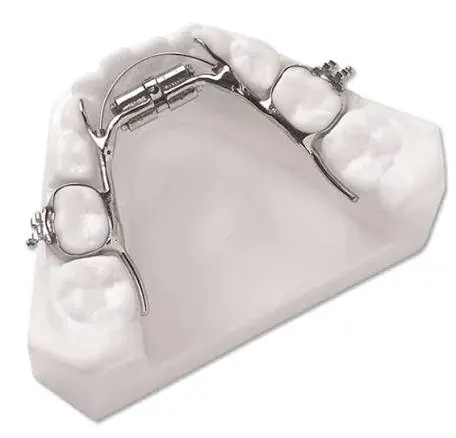
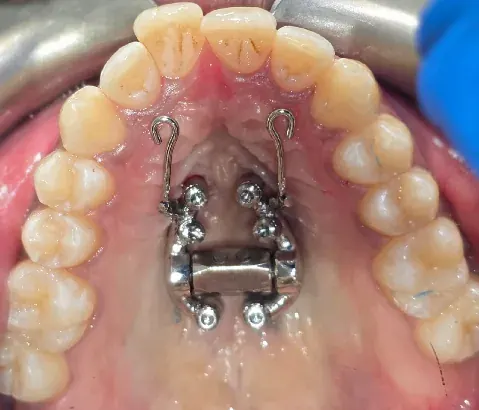
The correction follows the cause. A posterior crossbite due to a narrow maxilla is treated by expansion — conventional in a child, bone-anchored or surgically assisted in an adult. A single tooth in crossbite may need only localised movement. A crossbite that reflects a skeletal Class III relationship needs growth modification during childhood, camouflage, or orthognathic surgery in an adult.
Frequently asked questions
Will a crossbite correct itself?
Almost never. Unlike some bite discrepancies that change with growth and the eruption of permanent teeth, a crossbite generally persists and can become harder to treat once growth is complete. A posterior crossbite in a child is one of the clearer indications for early treatment.
Does a crossbite have to be treated?
Not in every case — the decision weighs the functional shift, the effect on the gums and teeth, and the patient's own concerns. But it is one of the few malocclusions where leaving it alone has reasonably well-documented consequences, so the argument for treating it is stronger than for many others.
Page last reviewed: 2026-09-10. This page is general health information about orthodontic care and is not a diagnosis, a treatment plan, or a substitute for an in-person clinical examination. Suitability for any treatment described here can only be established after a consultation, clinical assessment and the appropriate records. If you have symptoms that concern you, seek advice from a qualified clinician.
Appointments
Arrange a specialist orthodontic assessment in Dubai
Consultations take place at Manhal Medical Center, Al Safa 1, Dubai, in English or Arabic. Every assessment begins with a full clinical examination and, where indicated, 3D imaging — not a treatment quote.