Focus area
Sleep, breathing and orthodontics
Snoring and obstructive sleep apnoea are medical problems. Orthodontics has a defined, limited and genuinely useful role within their management. This section is careful about where that role begins and ends.

The distinction that matters
Snoring is noise made by vibration of the soft tissues of the upper airway. It is extremely common and, on its own, is not a diagnosis.
Obstructive sleep apnoea (OSA) is a medical condition in which the upper airway repeatedly narrows or closes during sleep, causing interrupted breathing, falls in blood oxygen and fragmented sleep. It is associated with cardiovascular risk, daytime sleepiness and impaired concentration. It is diagnosed by a physician on the basis of a sleep study — not by an orthodontist, and not from a photograph, a scan or a questionnaire alone.
Signs that should prompt medical assessment

- Loud, habitual snoring, particularly with pauses witnessed by a partner.
- Waking with a gasp or choking sensation.
- Unrefreshing sleep, morning headache, or a dry mouth on waking.
- Excessive daytime sleepiness — especially falling asleep while driving or in meetings.
- In children: habitual snoring, mouth breathing at night, restless sleep, unusual sleeping positions, bedwetting beyond the expected age, or daytime behavioural and attention difficulties.
Children are not small adults in this respect. Paediatric sleep-disordered breathing presents differently, is most often related to adenotonsillar enlargement, and is managed primarily by paediatrics and ENT.
Where orthodontics contributes
| Intervention | For whom | What it is for | Limits |
|---|---|---|---|
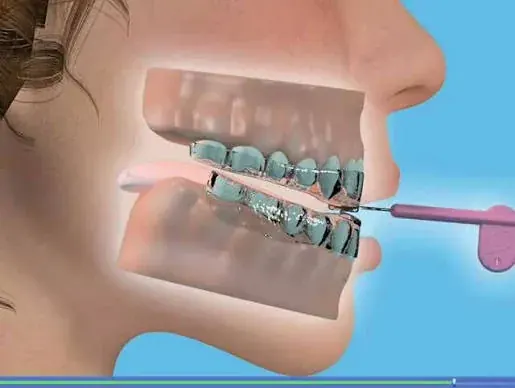
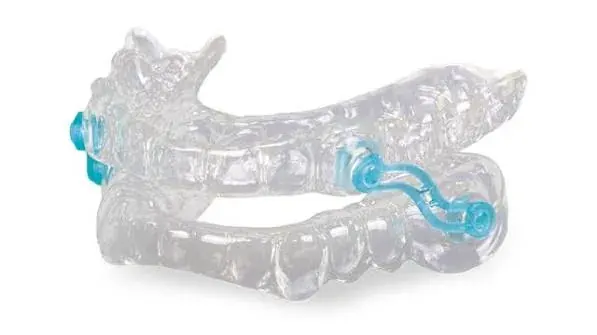
| Mandibular advancement device | Adults with mild to moderate diagnosed OSA, or snoring, where a sleep physician considers it appropriate — including those who cannot tolerate CPAP | Holds the lower jaw slightly forward during sleep to increase pharyngeal space | Not first-line for severe OSA; needs dental suitability, follow-up and monitoring for bite change |
| Maxillary skeletal expansion (MARPE/MSE) | Selected patients with a transverse deficiency, assessed on CBCT | Widens the maxilla and the nasal floor as part of a structural plan | Not a treatment for OSA; effect on breathing is variable and cannot be promised |
| Growth modification in children | Growing children with a significantly retruded mandible | Alters jaw relationship during growth as part of a broader plan | Secondary to ENT and paediatric management of the underlying obstruction |
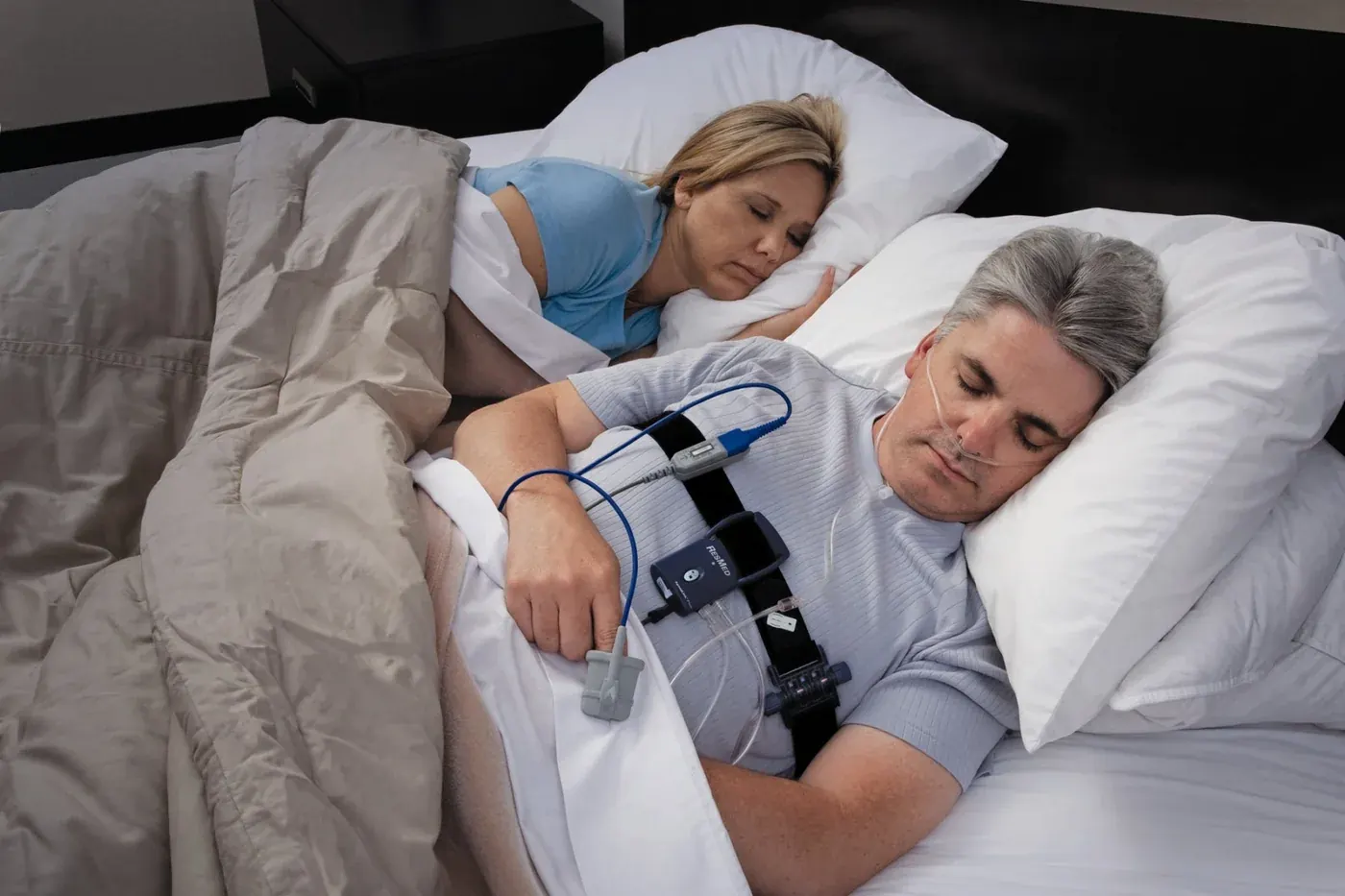
| Home sleep study | Patients where screening will inform referral | Objective data to support and accelerate medical assessment | It is a screening tool. It is not a diagnosis and does not replace a physician |
How a patient with sleep symptoms is handled here
- Recognition
Sleep and breathing questions form part of the standard orthodontic history, for adults and children.
- Screening where useful
Where symptoms suggest a breathing disorder, a home sleep study may be arranged to provide objective data for the referral.
- Referral
To a sleep physician, and to ENT where nasal or adenotonsillar obstruction is likely. Diagnosis and medical management stay with them.
- Orthodontic treatment within the medical plan
Oral appliance therapy or structural orthodontic treatment, where the physician agrees it is appropriate.
- Shared follow-up
Appliance fit, dental side effects and bite changes are monitored here; efficacy against the breathing disorder is reviewed by the physician.
Sleep apnoea orthodontics
The treatment page: oral appliance therapy in detail.
Read more
Sleep-disordered breathing
The wider spectrum, including in children.
Read more
Mandibular advancement devices
How they work, who they suit, and their side effects.
Read more
Home sleep study
What a home study measures and what it cannot tell you.
Read more
Snoring
Why it happens and when it needs investigating.
Read more
Airway orthodontics
The structural assessment that sits behind all of this.
Read more
Diagnosis comes first
A home sleep study recorder used to screen breathing during sleep
Frequently asked questions
Can an oral appliance cure sleep apnoea?
No treatment described here is a cure. Mandibular advancement devices reduce the severity of obstructive sleep apnoea in many suitable patients and are an accepted option for mild to moderate disease and for people who cannot tolerate CPAP. Their effect varies between individuals, they need to be monitored, and effectiveness is judged by repeat sleep testing arranged by your physician.
Do I need a sleep study before an oral appliance?
Yes. An oral appliance for sleep-disordered breathing should follow a diagnosis, because the appropriate treatment depends on the severity and type of the disorder. Treating snoring with an appliance while an undiagnosed moderate or severe apnoea continues underneath is the risk this rule exists to prevent.
Will expansion cure my child's snoring?
It should not be presented that way. Most childhood snoring relates to adenoids and tonsils, and ENT assessment comes first. Where a narrow upper jaw coexists, expansion may be a reasonable part of a plan, but it is not offered as a treatment for the breathing symptom itself.
Can an appliance change my bite?
Long-term use of a mandibular advancement device can produce dental and occlusal changes in some patients — this is a recognised side effect, not a rare surprise. It is monitored with records at review appointments, and it is part of the consent discussion before treatment starts.
Page last reviewed: 2026-09-10. This page is general health information about orthodontic care and is not a diagnosis, a treatment plan, or a substitute for an in-person clinical examination. Suitability for any treatment described here can only be established after a consultation, clinical assessment and the appropriate records. If you have symptoms that concern you, seek advice from a qualified clinician.
Continue reading
Sleep apnoea and orthodontics in Dubai
Oral appliance therapy is an established treatment for obstructive sleep apnoea in the right patients. It sits inside a…
Mandibular advancement devices
A mandibular advancement device is a custom appliance that holds the lower jaw forward during sleep. It is an effective…
Snoring
Snoring is noise made by vibrating soft tissue in a narrowed airway. Most snoring is socially inconvenient and medically…
Appointments
Arrange a specialist orthodontic assessment in Dubai
Consultations take place at Manhal Medical Center, Al Safa 1, Dubai, in English or Arabic. Every assessment begins with a full clinical examination and, where indicated, 3D imaging — not a treatment quote.