Condition
Sleep-disordered breathing
Sleep-disordered breathing describes a spectrum, from simple snoring through upper airway resistance to obstructive sleep apnoea. Where a patient sits on that spectrum is a medical question with a medical answer.
The spectrum
| What happens | Typical consequence | |
|---|---|---|
| Simple snoring | Soft tissue vibrates; airflow is maintained | Noise; usually no measurable effect on sleep quality |
| Upper airway resistance | Increased effort to breathe without full obstruction | Fragmented sleep and daytime tiredness, with a normal or near-normal apnoea index |
| Obstructive sleep apnoea | Repeated partial or complete airway collapse | Oxygen desaturation, arousals, daytime sleepiness, cardiovascular risk |
How it is diagnosed
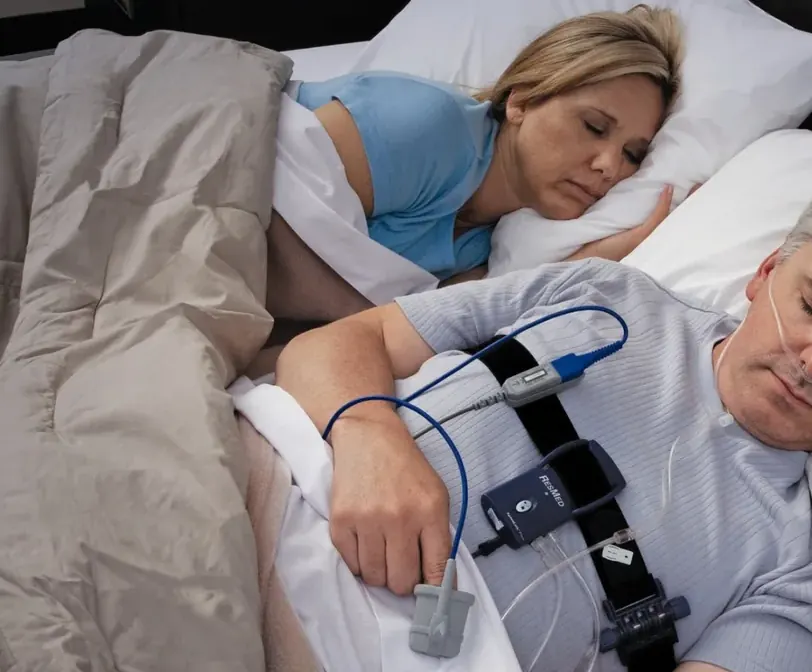
By a sleep study — either a home study or, where indicated, in-laboratory polysomnography — interpreted by a physician. Questionnaires, photographs, imaging and clinical examination all contribute to deciding who should be tested. None of them substitutes for the test.

Children are a separate problem
Paediatric sleep-disordered breathing presents differently from the adult form. Children may not appear sleepy; they may instead be hyperactive, inattentive or irritable. Bedwetting beyond the expected age, restless sleep, unusual sleeping positions and habitual snoring are all signals. The commonest cause by a wide margin is adenotonsillar hypertrophy, and the commonest effective treatment is its removal — an ENT decision, not an orthodontic one.
Where orthodontics fits
- Recognising the pattern during routine orthodontic assessment and referring.
- Providing screening data through a home sleep study where that will accelerate medical assessment.
- Oral appliance therapy for adults where a physician considers it appropriate.
- Maxillary expansion and growth modification as part of a structural plan, alongside medical management, not instead of it.
Frequently asked questions
Can an orthodontist diagnose sleep apnoea?
No. Diagnosis requires a sleep study interpreted by a physician. An orthodontist can recognise features associated with an increased risk, can arrange screening, and can treat within a physician's plan.
My child snores. Should I be worried?
Habitual snoring in a child is worth mentioning to your doctor. Unlike adult simple snoring, it is not regarded as harmless, and it is often associated with enlarged adenoids and tonsils. That does not mean something is seriously wrong — it means it is worth checking.
Page last reviewed: 2026-09-10. This page is general health information about orthodontic care and is not a diagnosis, a treatment plan, or a substitute for an in-person clinical examination. Suitability for any treatment described here can only be established after a consultation, clinical assessment and the appropriate records. If you have symptoms that concern you, seek advice from a qualified clinician.
Appointments
Arrange a specialist orthodontic assessment in Dubai
Consultations take place at Manhal Medical Center, Al Safa 1, Dubai, in English or Arabic. Every assessment begins with a full clinical examination and, where indicated, 3D imaging — not a treatment quote.