
Condition
Snoring
Snoring is noise made by vibrating soft tissue in a narrowed airway. Most snoring is socially inconvenient and medically unimportant. Some of it is the audible part of something that is not.
Why people snore
- Reduced muscle tone during sleep, allowing the soft palate and tongue base to fall back.
- Nasal obstruction, which increases the negative pressure drawing tissues inward.
- Enlarged tonsils and adenoids, especially in children.
- Increased weight and neck circumference.
- Alcohol and sedatives in the hours before sleep.
- Sleeping supine.
- Craniofacial factors — a retruded mandible, a narrow maxilla, a low-set hyoid.
When snoring needs investigating
Snoring on its own, in an otherwise well person with refreshing sleep and no daytime sleepiness, is usually benign. Snoring should be investigated when it occurs with any of the following:
- Pauses in breathing witnessed by someone else.
- Waking with a gasp, choking sensation, or a dry mouth and headache.
- Excessive daytime sleepiness, particularly while driving.
- High blood pressure that is difficult to control.
- In a child: any habitual snoring at all. Habitual snoring in children is not considered benign in the way adult simple snoring is.
What orthodontics can offer
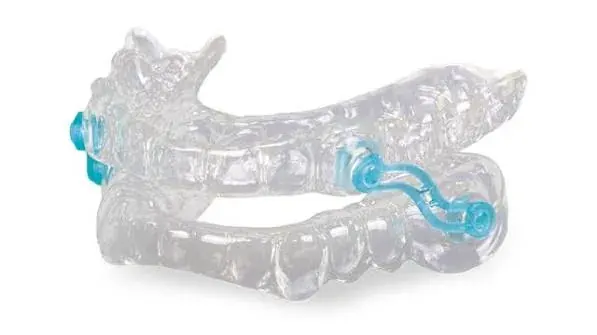
Where a physician has assessed the problem and considers an oral appliance appropriate, a mandibular advancement device holds the lower jaw slightly forward during sleep, increasing the space behind the tongue. These are effective for many people with simple snoring and for mild to moderate obstructive sleep apnoea, and are an established alternative for people who cannot tolerate CPAP. They require dental suitability, monitoring, and acceptance of possible long-term bite changes.
Frequently asked questions
Does snoring mean I have sleep apnoea?
Not necessarily — most snorers do not. But snoring is the commonest symptom of obstructive sleep apnoea, so the two cannot be separated without a sleep study. If you snore and also feel unrefreshed or sleepy during the day, that combination warrants investigation.
Can a dental appliance stop snoring?
Mandibular advancement devices reduce or eliminate snoring in a large proportion of suitable patients. They should be fitted after a proper assessment, by a clinician who will monitor the dental effects, and not before it is known whether the snoring is simple or a sign of apnoea.
Page last reviewed: 2026-09-10. This page is general health information about orthodontic care and is not a diagnosis, a treatment plan, or a substitute for an in-person clinical examination. Suitability for any treatment described here can only be established after a consultation, clinical assessment and the appropriate records. If you have symptoms that concern you, seek advice from a qualified clinician.
Appointments
Arrange a specialist orthodontic assessment in Dubai
Consultations take place at Manhal Medical Center, Al Safa 1, Dubai, in English or Arabic. Every assessment begins with a full clinical examination and, where indicated, 3D imaging — not a treatment quote.