Focus area
Airway-focused orthodontics
Jaw shape and the space available for breathing are related. That relationship is genuine, it is frequently overstated, and it needs to be handled with other specialties rather than alone. This section sets out what is known, what is uncertain and what orthodontics can contribute.

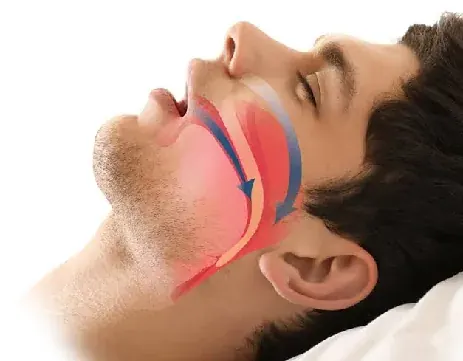
What "airway orthodontics" actually means
The upper airway runs from the nostrils to the larynx, and much of it is bounded by structures orthodontics can influence: the floor of the nose is the roof of the mouth; the tongue sits within the mandibular arch; the position of the maxilla and mandible determines where the tongue and soft palate sit relative to the pharyngeal wall.
Airway-focused orthodontics means taking those relationships seriously during diagnosis — assessing nasal patency, tongue posture, lip seal, arch width and jaw position as part of the routine examination, rather than confining the assessment to how the teeth line up. It does not mean treating breathing disorders with braces.
What is assessed
- Nasal breathing — whether the patient can breathe comfortably through the nose at rest, and whether obstruction is structural, allergic or adenotonsillar. Much of this belongs to ENT, and is referred.
- Transverse maxillary width — a narrow, high palate reduces the floor of the nasal cavity and is often accompanied by a crossbite.
- Sagittal jaw position — a retruded mandible reduces the space available behind the tongue.
- Tongue posture and oral function — resting tongue position, lip competence, swallowing pattern, and restricted tongue mobility where present.
- Symptoms of disturbed sleep — snoring, witnessed pauses, mouth breathing at night, restless sleep, unrefreshing sleep and daytime sleepiness. These trigger referral, not orthodontic treatment on their own.
Children and adults are different problems
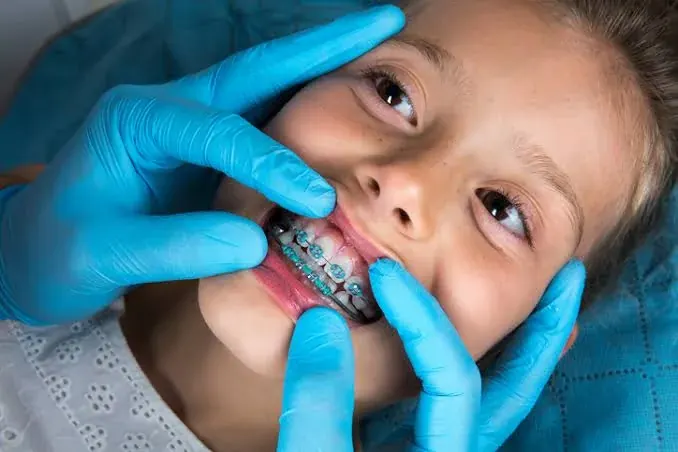
In children
Growth is the variable. Enlarged adenoids and tonsils are the commonest cause of obstructed breathing in children, and their management is medical or surgical, not orthodontic. Where a child has a narrow maxilla or a significantly retruded mandible alongside breathing symptoms, orthopaedic treatment during growth may be appropriate — as one part of a plan that includes ENT assessment, not as a substitute for it.
In adults
Growth has finished, so the tools change: skeletal expansion by miniscrew-assisted appliances, mandibular advancement devices for selected patients with diagnosed sleep apnoea, orthodontic preparation for orthognathic surgery where that is the appropriate route, and referral where the primary problem is nasal, medical or weight-related.
Working with other specialties
Airway problems cross specialty boundaries by nature. In practice this means orthodontics sits alongside:
Sleep medicine
Diagnosis of obstructive sleep apnoea and decisions about CPAP or other medical management belong to a sleep physician. Orthodontic devices are prescribed within that plan, not instead of it.
ENT surgery
Nasal obstruction, septal deviation, turbinate hypertrophy, adenoids and tonsils. Expansion will not relieve an obstruction that sits above it.
Allergy and respiratory medicine
Persistent rhinitis and asthma influence nasal breathing substantially and are often the more productive place to start.
Speech and language therapy
Orofacial myofunctional assessment, swallowing patterns and tongue function, where these are contributing.
Airway orthodontics in Dubai
The treatment page: assessment protocol, appliances and realistic aims.
Read more
Sleep and breathing
Snoring, sleep-disordered breathing and the orthodontic contribution.
Read more
Mouth breathing
Why it happens, what it changes, and what to do about it.
Read more
Narrow upper jaw
Transverse deficiency, and its relationship to the nasal floor.
Read more
Myofunctional therapy
Retraining tongue and lip function as an adjunct to structural treatment.
Read more
3D imaging
What CBCT can and cannot tell you about an airway.
Read more

Nasal breathing is the reference point
A person standing outdoors with arms open, breathing through the nose
Frequently asked questions
Can orthodontics improve my breathing?
It can change structures that bound the airway, and some patients report easier nasal breathing after maxillary expansion. Whether that will happen for you cannot be predicted, and improved breathing is not offered here as a treatment outcome. If breathing is your main concern, the assessment should start with medical and ENT evaluation.
My child breathes through their mouth. Is that an orthodontic problem?
It may have orthodontic consequences, but the cause is usually not orthodontic. The commonest reasons are enlarged adenoids and tonsils and allergic rhinitis, both of which need medical or ENT assessment first. Where a narrow upper jaw is also present, expansion may be part of the plan — after the obstruction has been addressed, not instead of it.
Do you diagnose sleep apnoea?
No. Obstructive sleep apnoea is diagnosed by a physician on the basis of a sleep study. The clinic can screen, can arrange a home sleep study to inform referral, and can provide oral appliance therapy where a sleep physician has diagnosed the condition and considers it appropriate.
Is "airway orthodontics" a recognised specialty?
No. Orthodontics is the recognised specialty; airway-focused practice is an emphasis within it, not a separate qualification. Be cautious of clinics presenting it as a distinct credential.
Page last reviewed: 2026-09-10. This page is general health information about orthodontic care and is not a diagnosis, a treatment plan, or a substitute for an in-person clinical examination. Suitability for any treatment described here can only be established after a consultation, clinical assessment and the appropriate records. If you have symptoms that concern you, seek advice from a qualified clinician.
Continue reading
Airway orthodontics in Dubai
An airway-focused assessment adds specific questions and specific measurements to a standard orthodontic examination. What it…
Mouth breathing
Habitual mouth breathing is a symptom, not a diagnosis. Treating the mouth without finding out why the nose is not being used…

Sleep, breathing and orthodontics
Snoring and obstructive sleep apnoea are medical problems. Orthodontics has a defined, limited and genuinely useful role…
Appointments
Arrange a specialist orthodontic assessment in Dubai
Consultations take place at Manhal Medical Center, Al Safa 1, Dubai, in English or Arabic. Every assessment begins with a full clinical examination and, where indicated, 3D imaging — not a treatment quote.