Treatment
Airway orthodontics in Dubai
An airway-focused assessment adds specific questions and specific measurements to a standard orthodontic examination. What it does not do is convert orthodontics into respiratory medicine.
On this page
Airway orthodontics in Dubai

What the assessment adds
A conventional orthodontic examination looks at teeth, arches and jaw relationships. An airway-focused assessment adds the structures around them and how they are being used.
- Nasal patency at rest, and whether the patient can breathe comfortably through the nose with the lips closed.
- Transverse maxillary width and palatal vault height — the floor of the nose is the roof of the mouth.
- Sagittal position of the mandible, which determines the space available behind the tongue.
- Resting tongue posture, lip competence, swallowing pattern, and tongue mobility.
- Tonsil size on clinical examination, and a history suggestive of adenoidal obstruction.
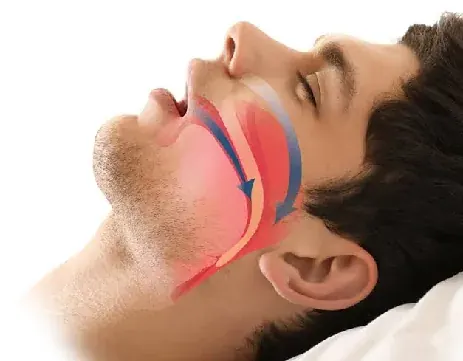
- A structured sleep history: snoring, witnessed pauses, restless sleep, mouth breathing at night, morning headache, daytime sleepiness.
What happens with the findings
- Identify what is orthodontic and what is not
A narrow maxilla is orthodontic. Enlarged adenoids, allergic rhinitis, a deviated septum and obesity are not. Most patients with airway concerns have at least one factor in the second group.
- Refer what is not orthodontic
To ENT, to allergy or respiratory medicine, to sleep medicine, or to speech and language therapy, with the specific question stated.
- Treat what is orthodontic, in the right order
Structural orthodontic treatment is planned around the medical management rather than ahead of it. Expanding a maxilla while an untreated nasal obstruction sits above it achieves less than doing both.
- State the aims honestly
Orthodontic treatment is offered to correct a diagnosed orthodontic problem. Any effect on breathing is discussed as possible, variable and unpredictable — never as the reason for treatment.
Orthodontic tools relevant to the airway
| Intervention | Who | Rationale | Limit |
|---|---|---|---|
| Maxillary expansion (RME / MARPE) | Patients with a diagnosed transverse deficiency | Widens the maxilla and the nasal floor | Effect on airflow varies and cannot be promised |
| Functional appliances | Growing children with a retruded mandible | Modifies jaw relationship during growth | Requires growth; secondary to management of any obstruction |
| Mandibular advancement device | Adults, within a physician's plan | Holds the mandible forward during sleep | Requires a diagnosis first; monitored for bite change |
| Myofunctional therapy | Selected patients, usually as an adjunct | Retrains tongue, lip and swallowing function | Evidence is limited; not a stand-alone treatment for a breathing disorder |
Children
In children, the commonest cause of obstructed breathing is enlarged adenoids and tonsils, and the commonest effective treatment is their removal — an ENT decision. Orthodontic treatment has a real role where there is a genuine skeletal problem, and growth makes timing matter, but it should never delay medical assessment.
In children, the order of investigation matters
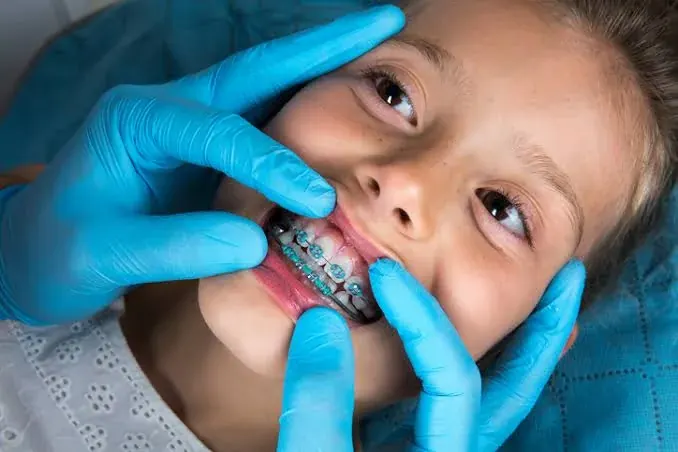
A child being fitted with an orthodontic appliance during an airway-focused assessment
Frequently asked questions
Is airway orthodontics a recognised specialty?
No. Orthodontics is the recognised specialty; an airway focus is an emphasis within it, not a separate qualification. Treat claims of a distinct "airway orthodontist" credential with caution.
Can orthodontic treatment improve nasal breathing?
Some patients report easier nasal breathing after maxillary expansion, and changes in nasal dimensions have been measured. Whether it happens for a given individual cannot be predicted, and it is not offered here as a treatment outcome.
Should my child have a CBCT scan to assess their airway?
Not routinely, and not for airway assessment alone. CBCT involves ionising radiation and should be justified by a specific question it will answer. Airway concerns in a child are assessed clinically, and by ENT and paediatric referral where indicated.
Page last reviewed: 2026-09-10. This page is general health information about orthodontic care and is not a diagnosis, a treatment plan, or a substitute for an in-person clinical examination. Suitability for any treatment described here can only be established after a consultation, clinical assessment and the appropriate records. If you have symptoms that concern you, seek advice from a qualified clinician.
Continue reading

Airway-focused orthodontics
Jaw shape and the space available for breathing are related. That relationship is genuine, it is frequently overstated, and it…
Mouth breathing
Habitual mouth breathing is a symptom, not a diagnosis. Treating the mouth without finding out why the nose is not being used…
Myofunctional therapy
Myofunctional therapy retrains how the tongue, lips and facial muscles work at rest and in function. It is a reasonable…
Appointments
Arrange a specialist orthodontic assessment in Dubai
Consultations take place at Manhal Medical Center, Al Safa 1, Dubai, in English or Arabic. Every assessment begins with a full clinical examination and, where indicated, 3D imaging — not a treatment quote.