Focus area
TMJ and the jaw joint
Pain, clicking, locking and restricted opening of the jaw are common, and they have several different causes. This section explains how those causes are separated, what orthodontics can and cannot contribute, and what assessment in Dubai involves.

On this page
TMJ and the jaw joint
What the temporomandibular joint is
The temporomandibular joint (TMJ) connects the lower jaw to the skull just in front of each ear. It is unusual among human joints: there are two of them, they must move together, and a fibrocartilaginous disc sits between the two bony surfaces and travels with the condyle as the jaw opens. Both the joint itself and the muscles that move it can generate pain, and they do so in different patterns.
Temporomandibular disorder (TMD) is the collective term for problems affecting the joint, the muscles of mastication, or both. It is not one condition. Muscle-dominant pain, disc displacement with reduction, disc displacement without reduction, degenerative joint disease and inflammatory arthropathies all present differently and respond to different things — which is why an accurate description of the problem matters more than the label.
Symptoms that bring people in
- Pain in front of the ear, in the cheek, the temple or along the jaw, often worse on waking or after chewing.
- Clicking, popping or grating noises when opening or closing.
- The jaw catching, or locking either closed (limited opening) or open.
- A change in how the teeth meet, or the sensation that the bite has shifted.
- Headaches in the temples, ear pain or fullness without infection, and tinnitus in some patients.
- Awareness of clenching or grinding, or tooth wear noticed by a dentist.
How assessment works here
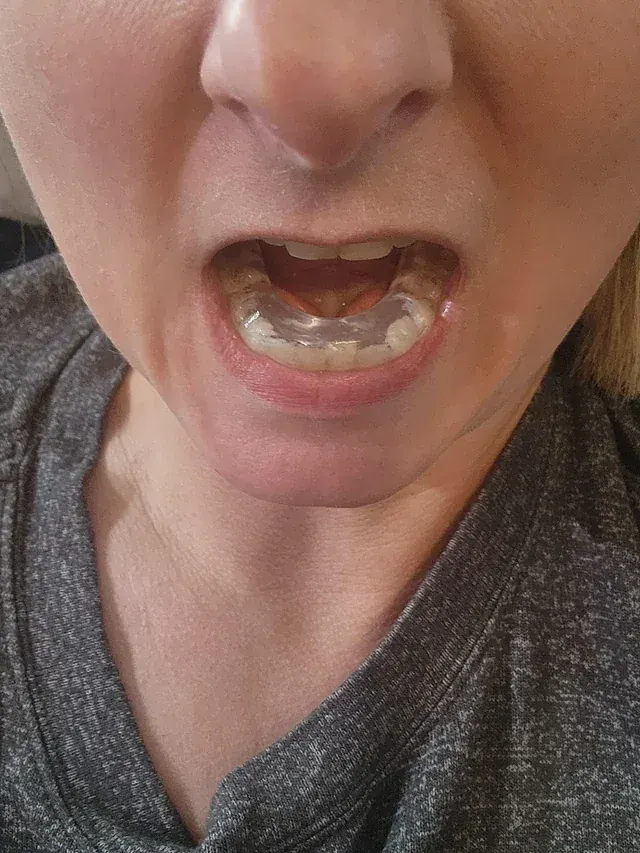
- History
Where the pain is, what makes it worse, how long it has been present, whether the jaw has ever locked, parafunction, sleep, stress, trauma, and previous dental or orthodontic treatment.
- Clinical examination
Range and path of opening, joint noises and where in the cycle they occur, palpation of the joint and of the masticatory muscles, occlusal examination and screening of the cervical spine and cranial nerves as indicated.
- Imaging where it will change the plan
Imaging is not routine. It is taken when the clinical picture raises a question a scan can answer — suspected degenerative change, a history of trauma, or planning that depends on condylar position.
- Explanation and staged plan
Which type of temporomandibular disorder best fits the findings, what conservative management is indicated first, and whether an orthodontic phase is worth considering afterwards.
Where it fits in the wider picture
Bruxism, disturbed sleep and airway problems appear repeatedly in patients with jaw symptoms. The relationships are real but not simple, and they run in more than one direction. Where a patient with jaw pain also reports loud snoring, unrefreshing sleep or daytime sleepiness, that is a reason to look at breathing as well — usually with a sleep physician — rather than to assume one explains the other.
TMJ treatment in Dubai
The treatment page: conservative management, splints, and where orthodontics fits.
Read more
TMJ disorders explained
The condition page: types, causes, natural history and prognosis.
Read more
Splints and orthotics
What splint therapy does, what it does not do, and how long it is used.
Read more
Day and night orthotics
Paired appliances used through the day and night in selected cases.
Read more
Imaging the joint
When a CBCT scan of the joint genuinely changes the treatment decision.
Read more
Myofunctional therapy
Retraining oral and facial muscle function alongside other management.
Read more
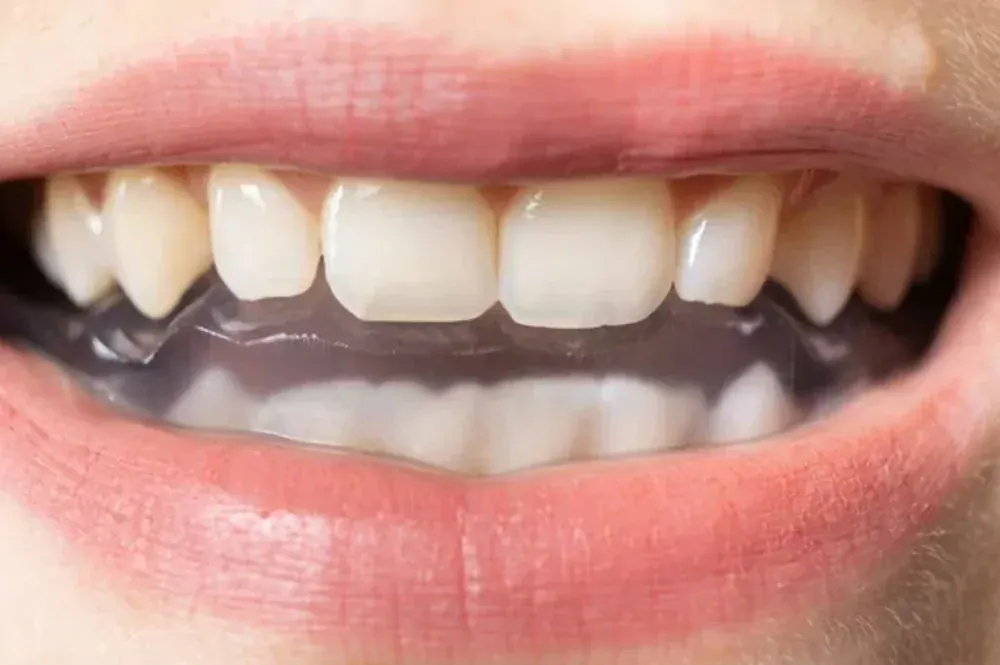
Reversible first, always
A discreet daytime occlusal orthotic worn on the lower teeth
Frequently asked questions
Will braces fix my jaw clicking?
Not predictably. Joint noise is common in the general population and often needs no treatment at all. Orthodontics changes tooth position and, with skeletal appliances, jaw relationships — it does not reposition a displaced disc. Where a clear occlusal or skeletal problem is contributing to symptoms, correcting it may help, but no orthodontic treatment should be sold as a cure for clicking.
Why not just wear a night guard?
A stabilisation splint is a reasonable first-line measure for many patients and is often exactly what is prescribed. The point of assessment is to know what the splint is for — protecting teeth from wear, reducing muscle activity, or as a diagnostic step before further treatment — and to review whether it is working, rather than leaving it in place indefinitely by default.
How long does jaw pain take to settle?
It varies widely. Muscle-dominant pain often responds within weeks to conservative measures; disc and degenerative problems follow their own course. Some people improve substantially, some improve partially, and a minority need ongoing management. Anyone offering you a timeline before examining you is guessing.
Do I need a CBCT scan of my jaw joints?
Only if it will change what is done. Cone beam CT shows bone well and soft tissue poorly, so it answers questions about degenerative change and condylar position rather than about the disc. It is justified case by case, because it involves ionising radiation.
Page last reviewed: 2026-09-10. This page is general health information about orthodontic care and is not a diagnosis, a treatment plan, or a substitute for an in-person clinical examination. Suitability for any treatment described here can only be established after a consultation, clinical assessment and the appropriate records. If you have symptoms that concern you, seek advice from a qualified clinician.
Continue reading
TMJ treatment in Dubai
Treatment for a temporomandibular disorder should start with knowing which disorder it is. What follows is staged, begins with…
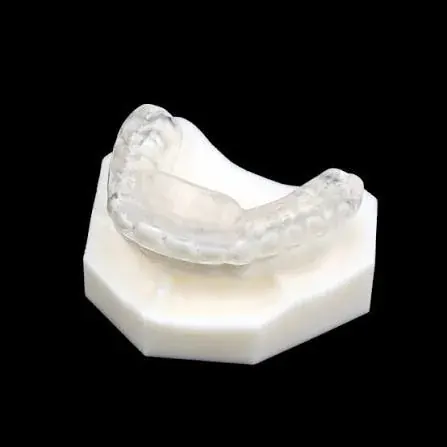
Splints and occlusal orthotics
A splint is a removable appliance worn over the teeth. Used with a clear purpose and a review date, it is useful. Used as a…
Temporomandibular disorders (TMD)
TMD is not one condition. It is a group of problems affecting the jaw joint, the chewing muscles, or both, and separating them…
Appointments
Arrange a specialist orthodontic assessment in Dubai
Consultations take place at Manhal Medical Center, Al Safa 1, Dubai, in English or Arabic. Every assessment begins with a full clinical examination and, where indicated, 3D imaging — not a treatment quote.