Treatment
Braces in Dubai
Fixed appliances remain the most versatile tool in orthodontics. They can produce movements no removable appliance can, they work whether or not the patient remembers to wear something, and they are still the right answer for a large proportion of cases.
What fixed braces are
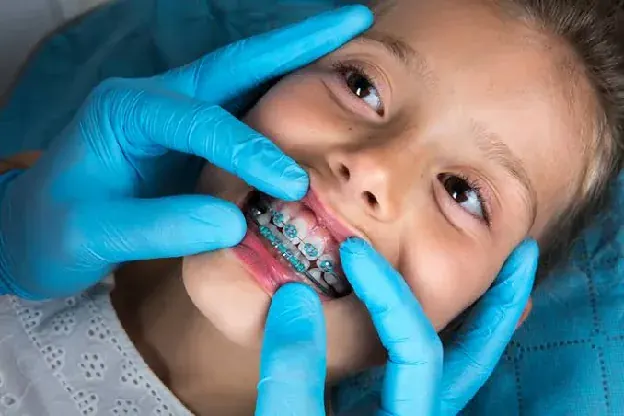
A fixed appliance consists of brackets bonded to each tooth and a wire engaged into them. The wire is shaped to a target arch form; as it returns towards that shape it moves the teeth with it. Over a course of treatment the wires progress from thin and flexible — which level and align — to thicker and more rigid, which control root position, torque and the final detail of the bite.
The critical point is that brackets are not interchangeable placements. Where each bracket sits on each tooth encodes the final position of that tooth. This is the part of treatment where specialist experience shows, and it is invisible to the patient.
Types available
| Type | Appearance | Notes |
|---|---|---|
| Stainless steel | Visible metal brackets | The most robust and least expensive option; smallest bracket profile; handles the widest range of mechanics. |
| Ceramic | Tooth-coloured brackets | Considerably less visible. Slightly bulkier, more brittle, and can increase friction; still capable of full treatment. |
| Self-ligating | Metal or ceramic, no elastic modules | A clip retains the wire. Convenient and clean; claims of dramatically faster treatment are not well supported by evidence. |
Who fixed braces suit
- Cases requiring significant rotation, root movement, extrusion or controlled space closure.
- Skeletal cases where elastics, headgear or skeletal anchorage are part of the mechanics.
- Patients undergoing orthodontic preparation for jaw surgery.
- Adolescents, where compliance with a removable appliance is uncertain.
- Complex retreatment after previous orthodontics.
- Anyone who simply prefers an appliance that works without being remembered.
What treatment involves
- Records and plan
Examination, scans, photographs and radiographs; the target position of every tooth is decided before anything is bonded.
- Fitting
Brackets are bonded and the first wire placed. This is not uncomfortable at the time; the teeth become tender for a few days afterwards.
- Alignment
Flexible wires level and align the arches. Most of the visible change happens in this phase, which is why patients often think treatment is nearly finished when it is not.
- Correction of the bite
Working wires, elastics and, where indicated, skeletal anchorage correct the relationship between the arches. This phase does the functional work.
- Detailing and finishing
Small individual adjustments to root position, torque and contact points. Skipping this is the difference between straight and finished.
- Debond and retention
Appliances are removed, retainers fitted the same day, and the retention regime explained.
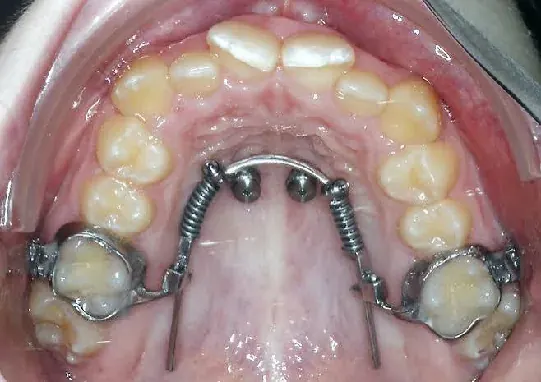
Detailing is where a case is finished
Intraoral view of temporary anchorage devices supporting non-extraction mechanics
Living with fixed braces
- Expect tenderness for two to four days after fitting and after each adjustment. Soft food and simple analgesia are usually enough.
- Cleaning takes longer. Interdental brushes and, for most people, a fluoride mouthrinse are not optional extras — decalcification around brackets is permanent.
- Avoid hard and sticky foods that break brackets. Every breakage costs treatment time.
- Appointments are typically every six to ten weeks.
Risks and considerations
- Decalcification and decay — the principal risk, and almost entirely preventable with good hygiene and diet.
- Root resorption — shortening of root tips occurs to a minor degree in many patients and is clinically significant in a small minority.
- Gum inflammation — usually reversible with better cleaning.
- Relapse — teeth move for life. Retention is lifelong if the result is to be kept.
- Duration — most comprehensive cases run 18 to 30 months, but individual estimates follow the diagnosis.
Frequently asked questions
How long will I need braces?
Most comprehensive cases take between 18 and 30 months, with simpler cases shorter and skeletal or surgical cases longer. An estimate specific to you follows the diagnostic records — anyone quoting a duration before examining you is guessing.
Are ceramic braces as effective as metal?
For the large majority of cases, yes. Ceramic brackets are bulkier and more brittle, and some mechanics are easier with metal, so a case with demanding movements may be better served by steel. The difference in outcome for a typical case is negligible.
Do braces damage teeth?
Braces do not damage teeth; poor hygiene during treatment does. White decalcification marks around bracket sites are permanent and are the single most common avoidable complication. Minor root shortening is common and rarely clinically significant, but it is monitored.
Can I have braces if I have crowns, implants or gum disease?
Often yes, with planning. Implants do not move and must be worked around; crowns and veneers need different bonding; and active gum disease must be treated and stable before orthodontics begins, because tooth movement in the presence of active periodontitis accelerates bone loss.
Page last reviewed: 2026-09-10. This page is general health information about orthodontic care and is not a diagnosis, a treatment plan, or a substitute for an in-person clinical examination. Suitability for any treatment described here can only be established after a consultation, clinical assessment and the appropriate records. If you have symptoms that concern you, seek advice from a qualified clinician.
Continue reading
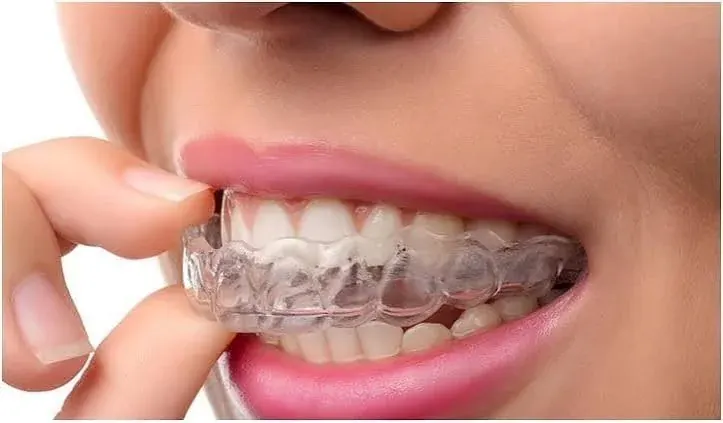
Clear aligners in Dubai
Aligners are a genuinely good appliance used within their range, and a poor one used outside it. The value of a specialist…

Adult orthodontics in Dubai
Teeth move at any age, because bone remodels throughout life. What changes in adulthood is everything around the tooth…
Crowded teeth
Crowding is a mismatch between the space available in the arch and the space the teeth need. Every treatment for it works by…
Appointments
Arrange a specialist orthodontic assessment in Dubai
Consultations take place at Manhal Medical Center, Al Safa 1, Dubai, in English or Arabic. Every assessment begins with a full clinical examination and, where indicated, 3D imaging — not a treatment quote.