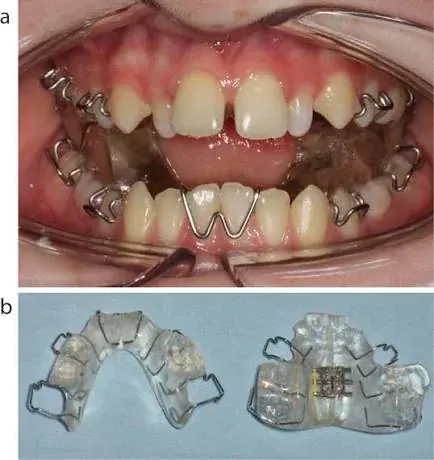
Condition
Overbite and deep bite
"Overbite" is one of the most misused words in dentistry. It describes how far the upper front teeth cover the lower ones vertically — not how far they stick out.
Overbite is not overjet
Overbite is vertical: the amount the upper incisors overlap the lower incisors when the back teeth are together. Overjet is horizontal: how far the upper incisors sit in front of the lower ones. Most people who say they have "a big overbite" mean an increased overjet. The distinction matters because the two are corrected differently.
When a deep overbite matters
- When the lower incisors are biting into the palate behind the upper teeth, which can cause soft tissue trauma.
- When the upper incisors are causing wear on the lower teeth, or vice versa.
- When it is limiting restorative treatment — there is no room to build up worn teeth.
- When it is associated with gum recession behind the upper front teeth.
- When it contributes to a skeletal pattern the patient wants corrected.
A deep bite that is causing none of the above is not automatically a problem requiring treatment. A proportion of the population has a deep bite, no symptoms and no damage.
How it is corrected
Correction means changing the vertical relationship: intruding incisors, extruding posterior teeth, or altering the jaw relationship. In a growing child a functional appliance may modify growth. In an adult, fixed appliances with appropriate mechanics, sometimes with skeletal anchorage, do the work. Aligners can address mild deep bites; substantial correction is more predictable with a fixed appliance.
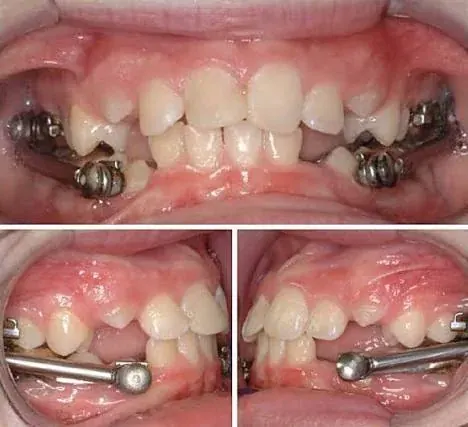
Frequently asked questions
Is an overbite bad for my teeth?
It can be, if it is deep enough to cause the lower teeth to contact the palate or to produce abnormal wear. Many deep bites cause neither, and are monitored rather than treated. The assessment looks for actual damage or a functional problem, not simply a measurement outside a textbook range.
Can an overbite be fixed without braces?
Mild cases can be improved with aligners. Substantial vertical correction is more predictable with a fixed appliance, and skeletal cases in adults may need anchorage or, occasionally, surgery. The answer depends on how much correction is needed and where it has to come from.
Page last reviewed: 2026-09-10. This page is general health information about orthodontic care and is not a diagnosis, a treatment plan, or a substitute for an in-person clinical examination. Suitability for any treatment described here can only be established after a consultation, clinical assessment and the appropriate records. If you have symptoms that concern you, seek advice from a qualified clinician.
Appointments
Arrange a specialist orthodontic assessment in Dubai
Consultations take place at Manhal Medical Center, Al Safa 1, Dubai, in English or Arabic. Every assessment begins with a full clinical examination and, where indicated, 3D imaging — not a treatment quote.