Treatment
Protraction facemask
A facemask pulls the upper jaw forward during growth. It is one of the few orthodontic treatments where a few years of delay genuinely changes what is achievable.
On this page
Protraction facemask
What it does
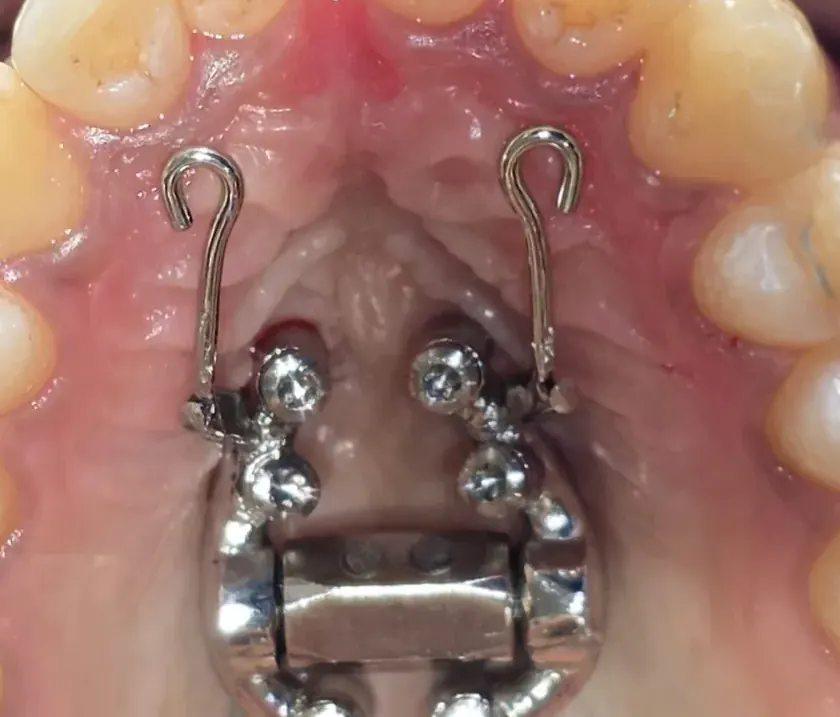
In a Class III pattern with maxillary deficiency, the upper jaw is set too far back relative to the lower. A protraction facemask rests on the forehead and chin and applies forward elastic traction to an intraoral appliance attached to the maxilla, encouraging forward growth at the sutures that surround it.
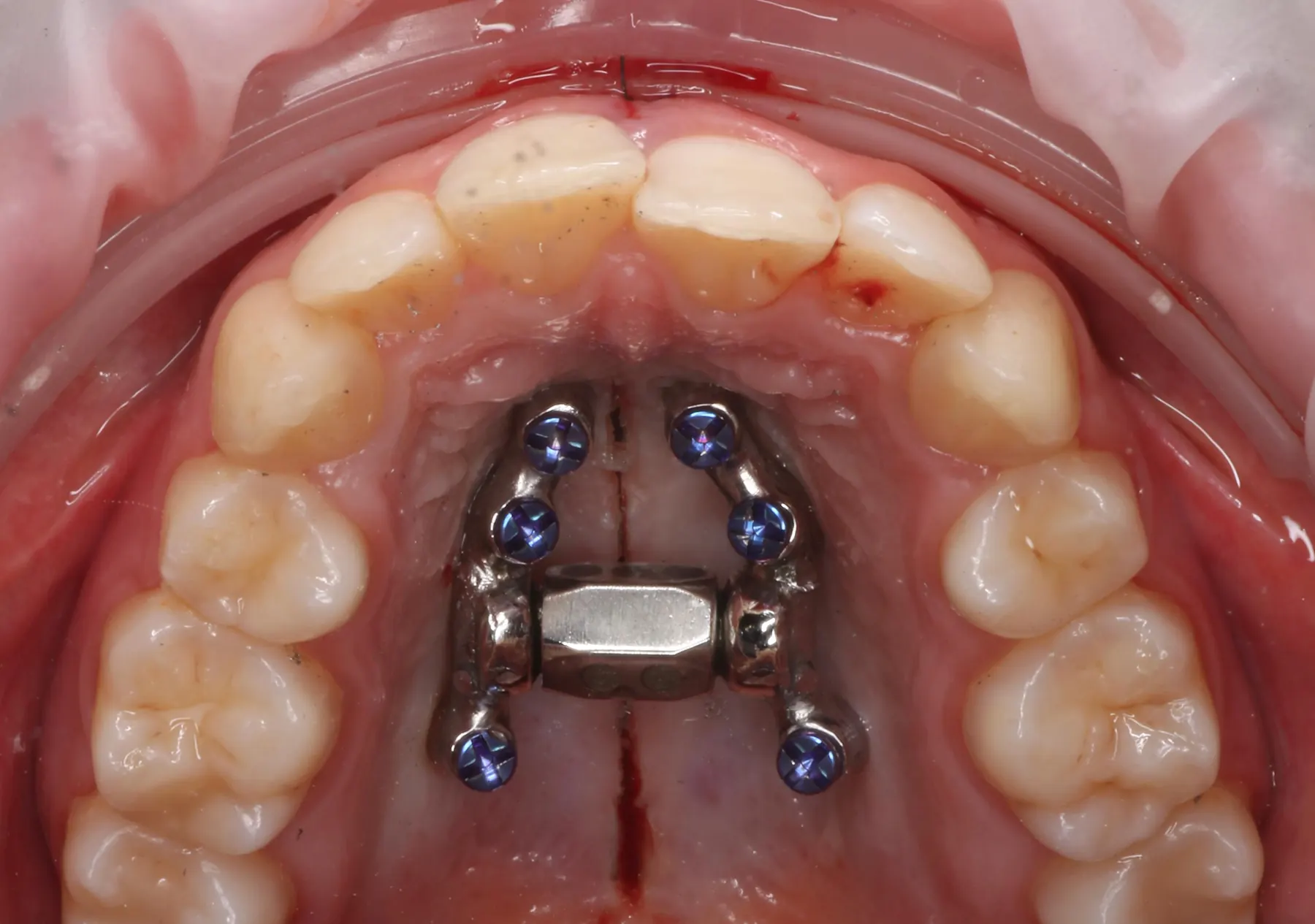
It is usually combined with maxillary expansion. Expansion is thought to loosen the circummaxillary sutures, and the two problems — narrow and retrusive — commonly occur together.
The age window
Protraction is most effective while the circummaxillary sutures are still responsive, generally before about ten years of age, and the effect diminishes through adolescence. This is the main reason a child with an anterior crossbite or a developing Class III pattern should be assessed early rather than at twelve.
Skeletal anchorage as an alternative
In older children and adolescents, protraction anchored to bone plates or miniscrews rather than to the teeth produces more skeletal and less dental change, and extends the age range over which useful protraction is possible. It involves a minor surgical procedure to place the anchorage.
What is asked of the child
- Twelve to fourteen hours of wear a day, principally in the evening and overnight. It is worn at home, not at school.
- Consistency matters more than intensity — intermittent wear produces little.
- Regular review, typically every six to eight weeks.
- Retention afterwards, since Class III patterns tend to reassert themselves with continued mandibular growth.
Frequently asked questions
At what age does a facemask work best?
Generally before about ten, while the sutures around the maxilla are still responsive. Skeletally anchored protraction extends this range somewhat in older children.
Does my child wear it at school?
No. It is worn at home in the evening and overnight, typically twelve to fourteen hours a day.
Will it avoid jaw surgery later?
It can, in many cases. It cannot be guaranteed, because mandibular growth continues into late adolescence and can re-establish the discrepancy. This is discussed before treatment starts.
Page last reviewed: 2026-09-10. This page is general health information about orthodontic care and is not a diagnosis, a treatment plan, or a substitute for an in-person clinical examination. Suitability for any treatment described here can only be established after a consultation, clinical assessment and the appropriate records. If you have symptoms that concern you, seek advice from a qualified clinician.
Appointments
Arrange a specialist orthodontic assessment in Dubai
Consultations take place at Manhal Medical Center, Al Safa 1, Dubai, in English or Arabic. Every assessment begins with a full clinical examination and, where indicated, 3D imaging — not a treatment quote.