Treatment
Adult orthodontics in Dubai
Teeth move at any age, because bone remodels throughout life. What changes in adulthood is everything around the tooth movement: the gums, the existing dental work, the speed, and the fact that jaw growth can no longer be used.

On this page
Adult orthodontics in Dubai
What is different about treating adults
| Factor | In adults |
|---|---|
| Growth | Finished. Jaw relationships cannot be modified; the options are dental camouflage, skeletal anchorage or surgery. |
| Bone response | Slower turnover, so movement is generally slower — though the difference is often overstated. |
| Periodontal condition | Bone loss and recession are common. Active periodontal disease must be treated and stable before movement begins; moving teeth in active disease accelerates bone loss. |
| Existing dental work | Crowns, veneers, bridges and implants change what is possible. Implants do not move and become fixed anchorage by default. |
| Missing teeth | Long-standing gaps allow drift and over-eruption; space may need reopening for restorative work. |
| Expectations | Adults are usually clearer about what is bothering them and better at retention — both of which help. |
Common reasons adults come in
- Crowding that has increased over the years, particularly lower incisor crowding.
- Relapse after childhood orthodontics, usually where retainers were stopped.
- Aesthetic concerns that were never addressed, or were treated incompletely.
- Preparation for restorative work — uprighting a tilted molar before a bridge, creating space for an implant, or levelling before a full-mouth reconstruction.
- A functional problem: a deep bite traumatising the palate, a shifting bite, or teeth wearing unevenly.
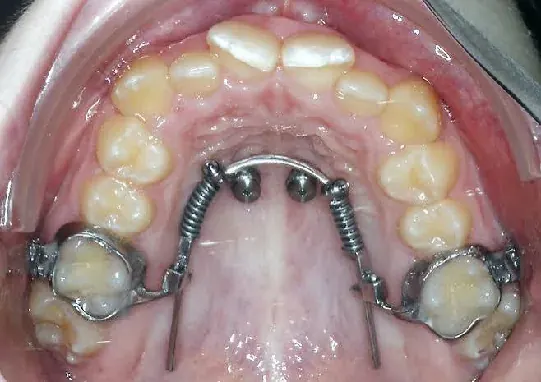
- A transverse deficiency being considered for skeletal expansion.
- Jaw joint symptoms alongside an occlusal problem the patient wants corrected.
What is possible, and what needs surgery
Orthodontics moves teeth. Where the underlying problem is skeletal — a jaw that is too far forward, too far back, or asymmetric — an appliance can compensate by positioning the teeth differently, which is called camouflage. Camouflage works well within limits and produces unstable or unaesthetic results if pushed beyond them.
Beyond those limits the options are orthognathic surgery, planned jointly with a maxillofacial surgeon, or accepting the discrepancy. Both are legitimate, and you should be told clearly which category your case falls into rather than being started on treatment that cannot reach the stated goal.
Before treatment starts
- Untreated decay is restored.
- Periodontal disease is treated and shown to be stable.
- The condition and prognosis of existing crowns, bridges and root-treated teeth is assessed, since some may not survive orthodontic movement.
- Where restorative work is planned afterwards, the restorative dentist is involved in planning the finish position — not shown it at the end.
Frequently asked questions
Am I too old for orthodontic treatment?
No. Bone remodels throughout life, so tooth movement works at any age. What matters is gum health, the condition of the teeth and existing dental work — not the number.
Does treatment take longer for adults?
Somewhat, in general, because bone turnover is slower — but the difference is often smaller than expected, and adult cooperation with elastics and retainers frequently offsets it.
Can I have orthodontics with gum disease?
Not while it is active. Periodontal disease must be treated and stable first, because moving teeth through inflamed, infected tissue accelerates bone loss. Once stable, orthodontic treatment can proceed with careful monitoring and can sometimes improve the periodontal situation.
I have crowns and implants — is treatment still possible?
Usually, with planning. Implants are fixed and become anchorage. Crowns and veneers need different bonding techniques and may need replacing after treatment if the tooth position changes. This is assessed in advance and discussed with your restorative dentist.
Page last reviewed: 2026-09-10. This page is general health information about orthodontic care and is not a diagnosis, a treatment plan, or a substitute for an in-person clinical examination. Suitability for any treatment described here can only be established after a consultation, clinical assessment and the appropriate records. If you have symptoms that concern you, seek advice from a qualified clinician.
Appointments
Arrange a specialist orthodontic assessment in Dubai
Consultations take place at Manhal Medical Center, Al Safa 1, Dubai, in English or Arabic. Every assessment begins with a full clinical examination and, where indicated, 3D imaging — not a treatment quote.