Treatment
Functional appliances in Dubai
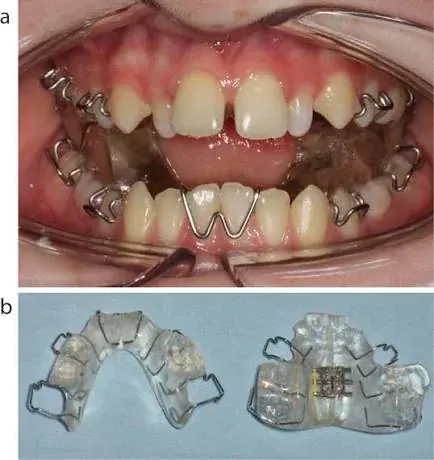
Functional appliances change the position the lower jaw is held in, and use the muscles and growth to modify the relationship between the jaws. They work in growing patients and not in adults, which makes timing the whole question.
What they do
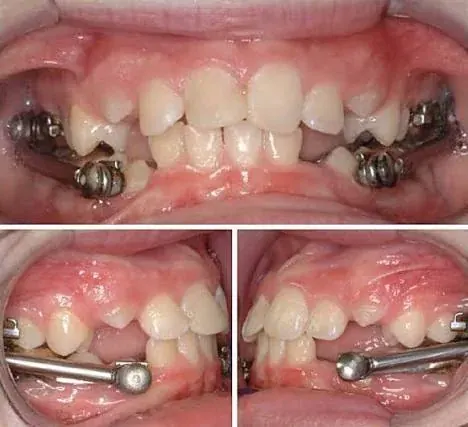
In a Class II pattern the lower jaw sits behind the upper, producing a large overjet. A functional appliance postures the mandible forward and holds it there. The effect is partly skeletal — modest additional mandibular growth and some restraint of the maxilla — and partly dental, as the upper incisors tip back and lower incisors forward.
The honest summary of the evidence is that a substantial part of the correction is dental rather than skeletal, and that the amount of genuine skeletal change is modest. What functional appliances reliably do is reduce a large overjet during growth, which matters for both function and the risk of incisor trauma.
The main types
| Appliance | Removable or fixed | Notes |
|---|---|---|
| Twin block | Removable | Two blocks that posture the mandible forward on closing. Effective, well tolerated, entirely dependent on being worn. |
| Herbst | Fixed | A telescopic mechanism holding the mandible forward continuously. Removes the compliance variable; more robust; more expensive. |
| Bionator / activator | Removable | Older one-piece designs, still used in selected cases. |
| Functional appliance with fixed appliances | Combined | Common where alignment and jaw correction are both needed. |
Timing
Functional appliances work best during the pubertal growth spurt, when there is growth available to modify. Started too early they lengthen treatment without adding benefit; started too late they achieve mostly dental change. Timing is judged from dental development, growth history and, where useful, a hand-wrist or cervical vertebral maturation assessment.
What to expect
- The appliance is bulky at first; speech and eating adapt within one to two weeks.
- Removable designs must be worn as prescribed — typically full-time except for eating and sport. Part-time wear produces part results.
- Jaw and muscle aching in the first days.
- Regular review, with the appliance advanced further as correction progresses.
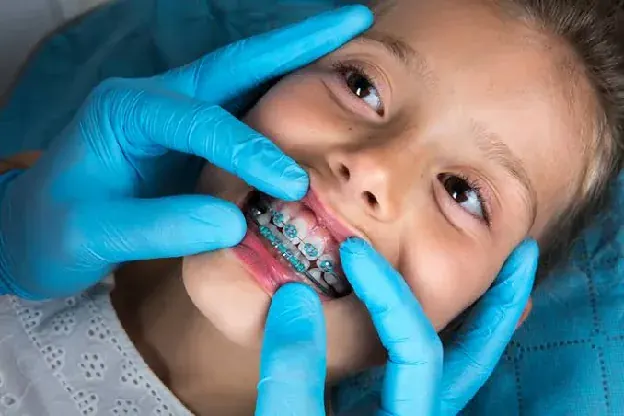
- A fixed appliance phase usually follows, to align and detail.
Frequently asked questions
Do functional appliances really grow the jaw?
They produce some additional mandibular growth and some restraint of the maxilla, but a substantial part of the correction is dental. The evidence does not support claims of dramatic skeletal transformation. What they reliably achieve is a reduced overjet during growth.
Can an adult use a functional appliance?
No, not for skeletal correction — there is no growth left to modify. Adult skeletal discrepancies are addressed by camouflage with fixed appliances and anchorage, or by orthognathic surgery.
How long is a functional appliance worn?
Typically nine to fifteen months for the functional phase, followed by a fixed appliance phase. Duration depends on the starting discrepancy and, for removable designs, on how consistently it is worn.
Page last reviewed: 2026-09-10. This page is general health information about orthodontic care and is not a diagnosis, a treatment plan, or a substitute for an in-person clinical examination. Suitability for any treatment described here can only be established after a consultation, clinical assessment and the appropriate records. If you have symptoms that concern you, seek advice from a qualified clinician.
Appointments
Arrange a specialist orthodontic assessment in Dubai
Consultations take place at Manhal Medical Center, Al Safa 1, Dubai, in English or Arabic. Every assessment begins with a full clinical examination and, where indicated, 3D imaging — not a treatment quote.