Treatment
MARPE treatment in Dubai
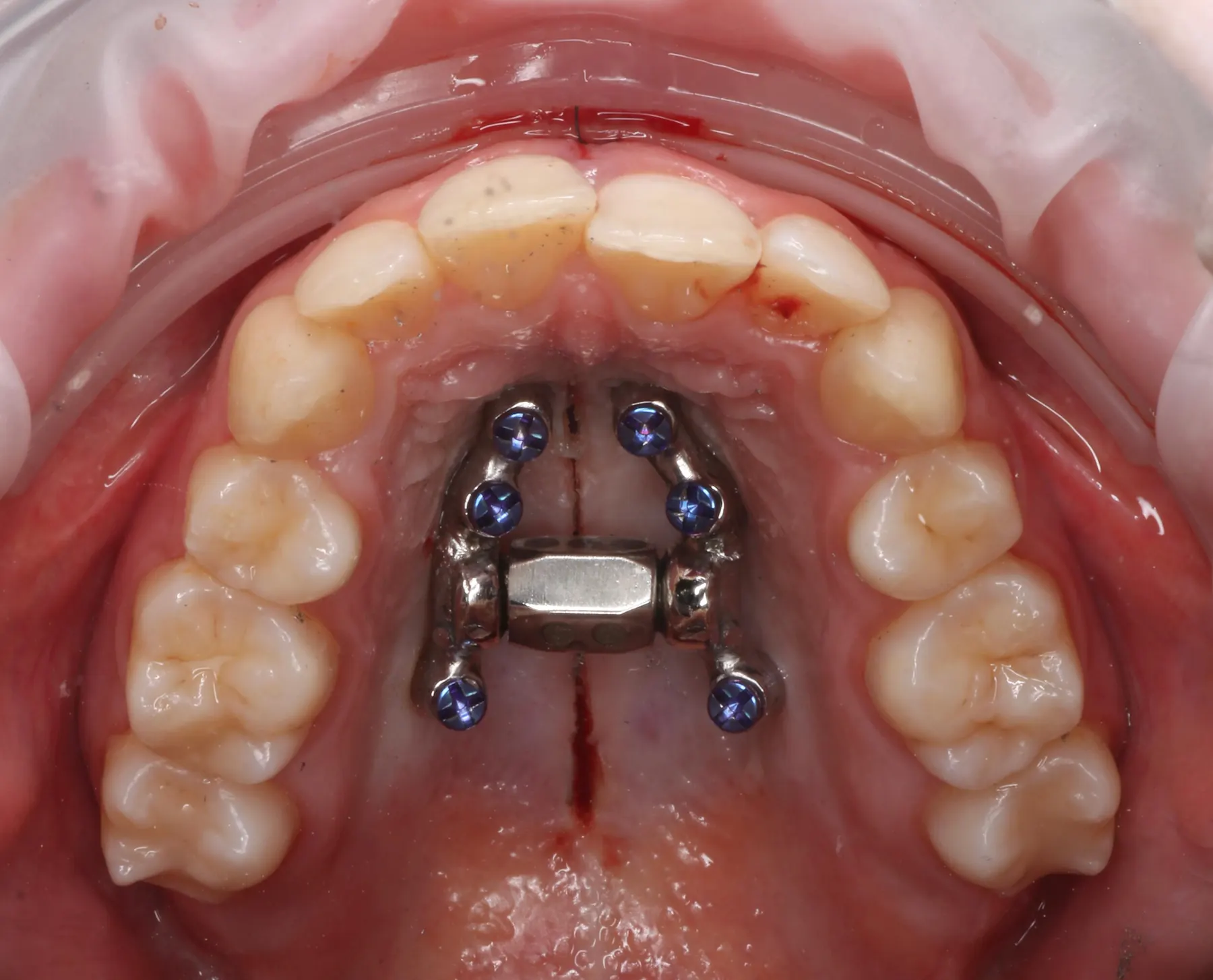
Miniscrew-assisted rapid palatal expansion widens the upper jaw at bone level, without surgery, in patients whose palatal anatomy supports it. This page covers the treatment itself: the process, the timeline, the aftercare and the risks.
Before anything is decided
MARPE begins with imaging, not with an appliance. The mid-palatal suture is assessed on CBCT for its stage of maturation, and palatal bone is measured at the intended miniscrew sites. Age is a poor guide: some patients in their thirties have a suture that will separate, and some eighteen-year-olds do not.
If the imaging shows that a non-surgical approach is unlikely to work, you are told that, and surgically-assisted expansion is discussed as the appropriate route rather than attempted as a fallback after a failed expansion.
The appliance
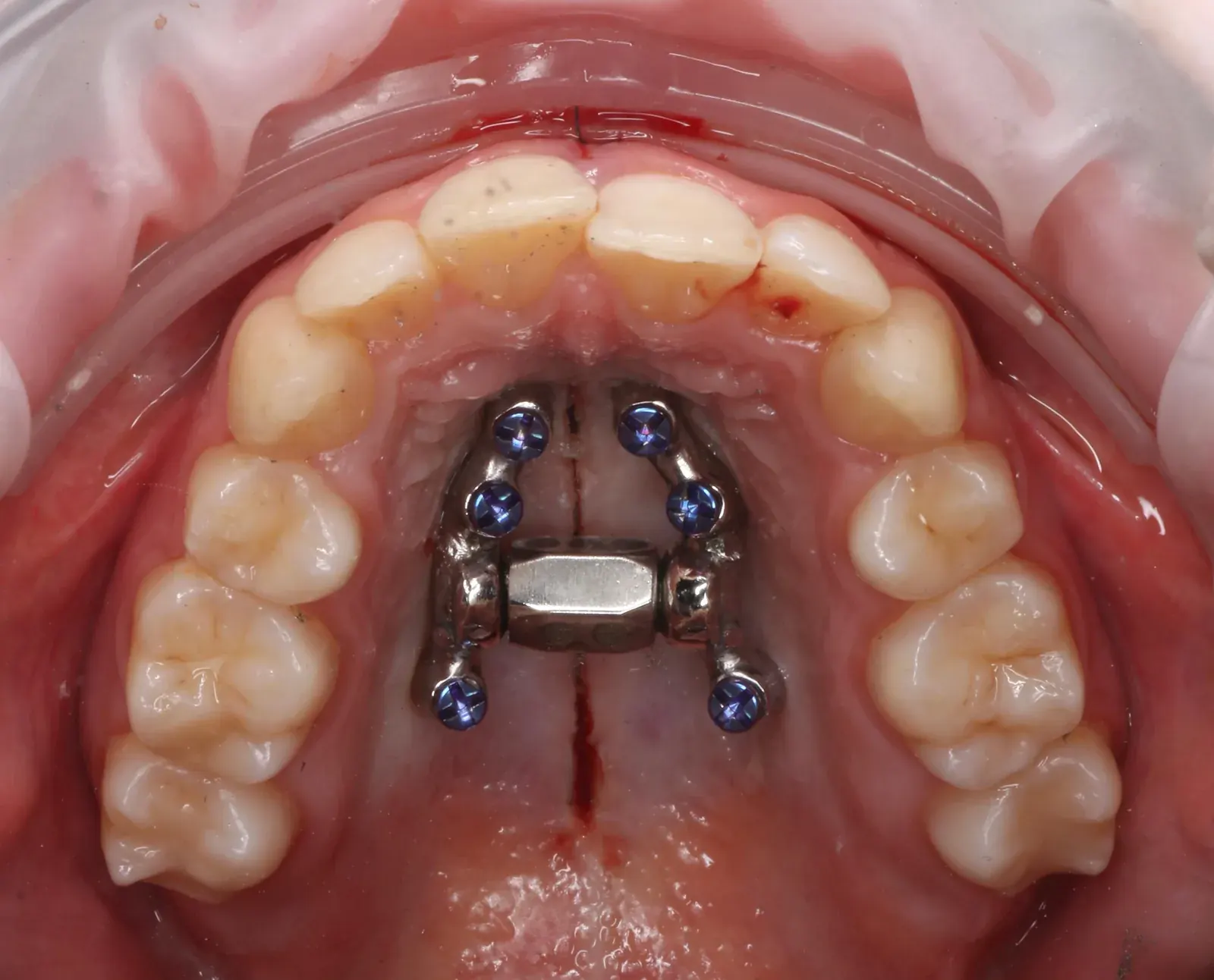
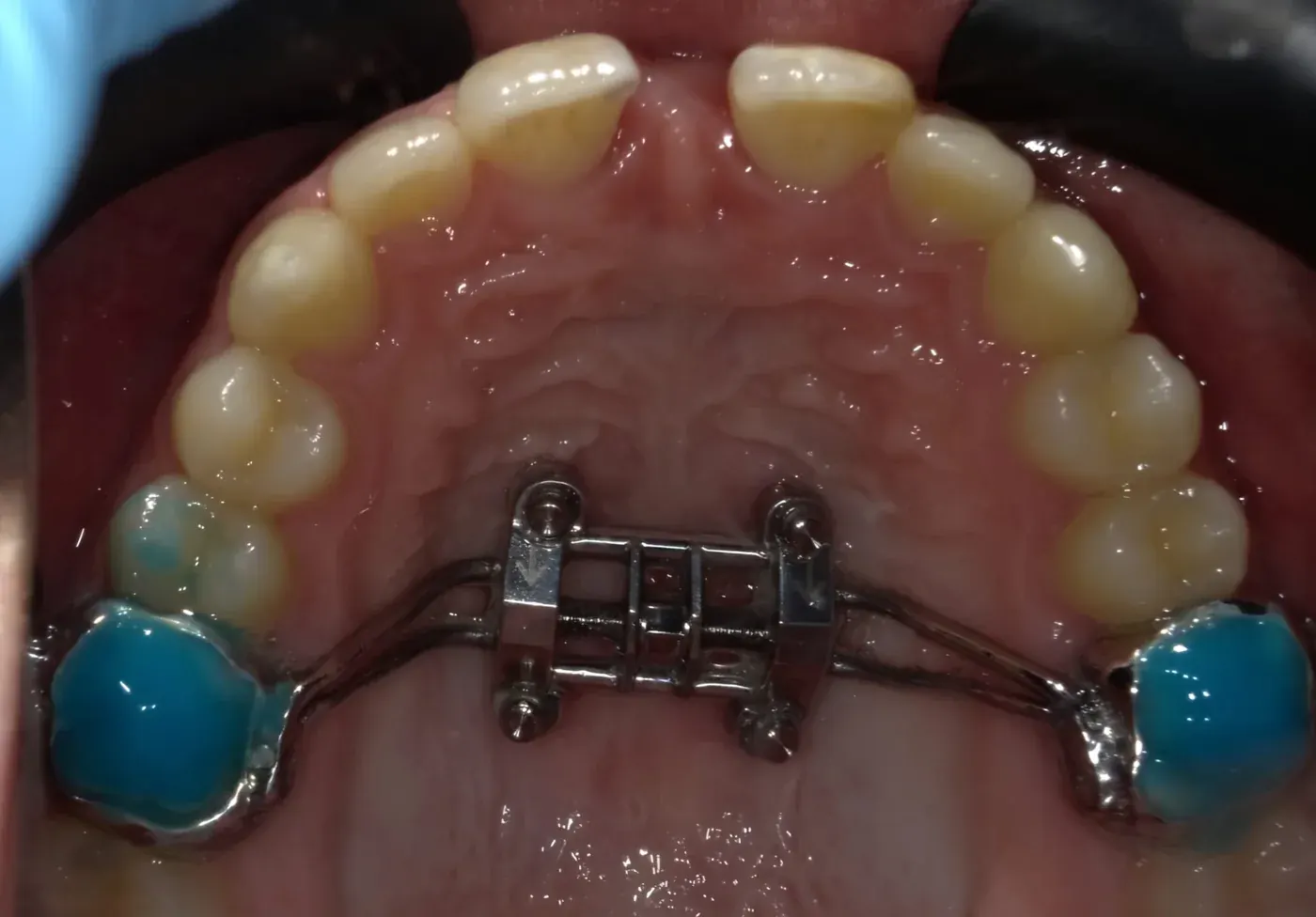
The expander is designed to your own palatal anatomy from the digital scan and CBCT, with the screw positions planned into the design rather than chosen at the chair. The body of the appliance carries the expansion screw and is anchored by temporary miniscrews placed into the palate, so that force is transmitted to bone rather than through the teeth.
The sequence
- Records
Clinical examination, digital intraoral scan, photographs and CBCT. This visit produces the information the plan is built from.
- Design and manufacture
The appliance is designed to your anatomy and manufactured. There is a wait between records and fitting.
- Fitting
The appliance is seated and the miniscrews placed under local anaesthetic. You are shown how to activate it and how to clean around it.
- Activation
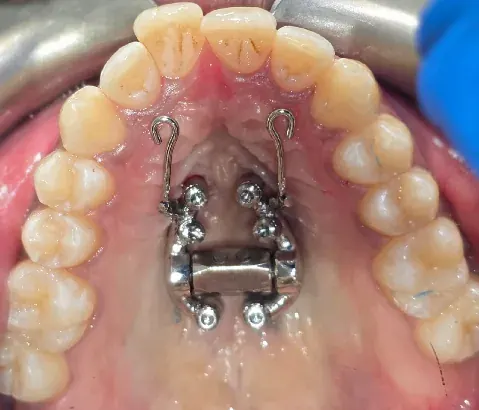
You turn the screw at home on a defined schedule. A gap usually opens between the upper front teeth — this indicates the two halves of the maxilla are separating, and is closed later. Progress is reviewed frequently in this phase.
- Consolidation
Once the target width is reached, the appliance stays passively in place for a period of months while new bone forms and matures in the suture. This phase is not optional and cannot be rushed.
- Onward treatment
Expansion creates skeletal width; aligning the teeth within the new arch form is a separate orthodontic phase, followed by retention.
Living with the appliance
- Expect pressure after each activation, often felt across the nose and cheekbones, lasting a short period.
- Speech is affected for the first days and adapts.
- Cleaning around the appliance and miniscrews matters — a water flosser or syringe is often the practical solution.
- Avoid hard and sticky food that could distort or unseat the appliance.
- Report a loose screw, persistent pain, or a screw that will not turn, rather than waiting for the next appointment.
Risks and limitations
- Not every adult is a candidate — a fused suture may require a surgical approach.
- The suture may fail to separate despite favourable imaging, in which case the plan changes.
- Miniscrews can loosen and occasionally need repositioning.
- Gum irritation, ulceration and discomfort during activation.
- Relapse if the consolidation and retention phases are cut short.
- Radiation exposure from CBCT, justified individually.
- MARPE does not treat or cure obstructive sleep apnoea, and its effect on nasal breathing varies between individuals and cannot be promised.
Frequently asked questions
How long does MARPE take?
Active expansion is measured in weeks. Consolidation, while new bone forms in the suture, is measured in months. Any subsequent alignment adds to that. Your own timeline is given after assessment.
Is the miniscrew placement painful?
It is done under local anaesthetic. Most patients describe pressure during placement and some tenderness afterwards, managed with simple analgesia.
What if the suture does not open?
It happens, and it is one reason the CBCT assessment comes first. If the suture does not separate, the appliance is removed and the plan is revised — usually towards a surgically-assisted approach. You should be told this possibility before starting, not after.
Will MARPE help my breathing?
Some patients report easier nasal breathing after expansion, and changes in nasal cavity dimensions have been measured. That is not a promise, it is not predictable for an individual, and MARPE is not offered here as a treatment for a breathing disorder.
Can MARPE avoid extractions?
By creating arch width it can reduce the space deficit, and in some cases that removes the need for extractions. Whether it does so in your case depends on how much space is needed and where the crowding sits.
Page last reviewed: 2026-09-10. This page is general health information about orthodontic care and is not a diagnosis, a treatment plan, or a substitute for an in-person clinical examination. Suitability for any treatment described here can only be established after a consultation, clinical assessment and the appropriate records. If you have symptoms that concern you, seek advice from a qualified clinician.
Continue reading
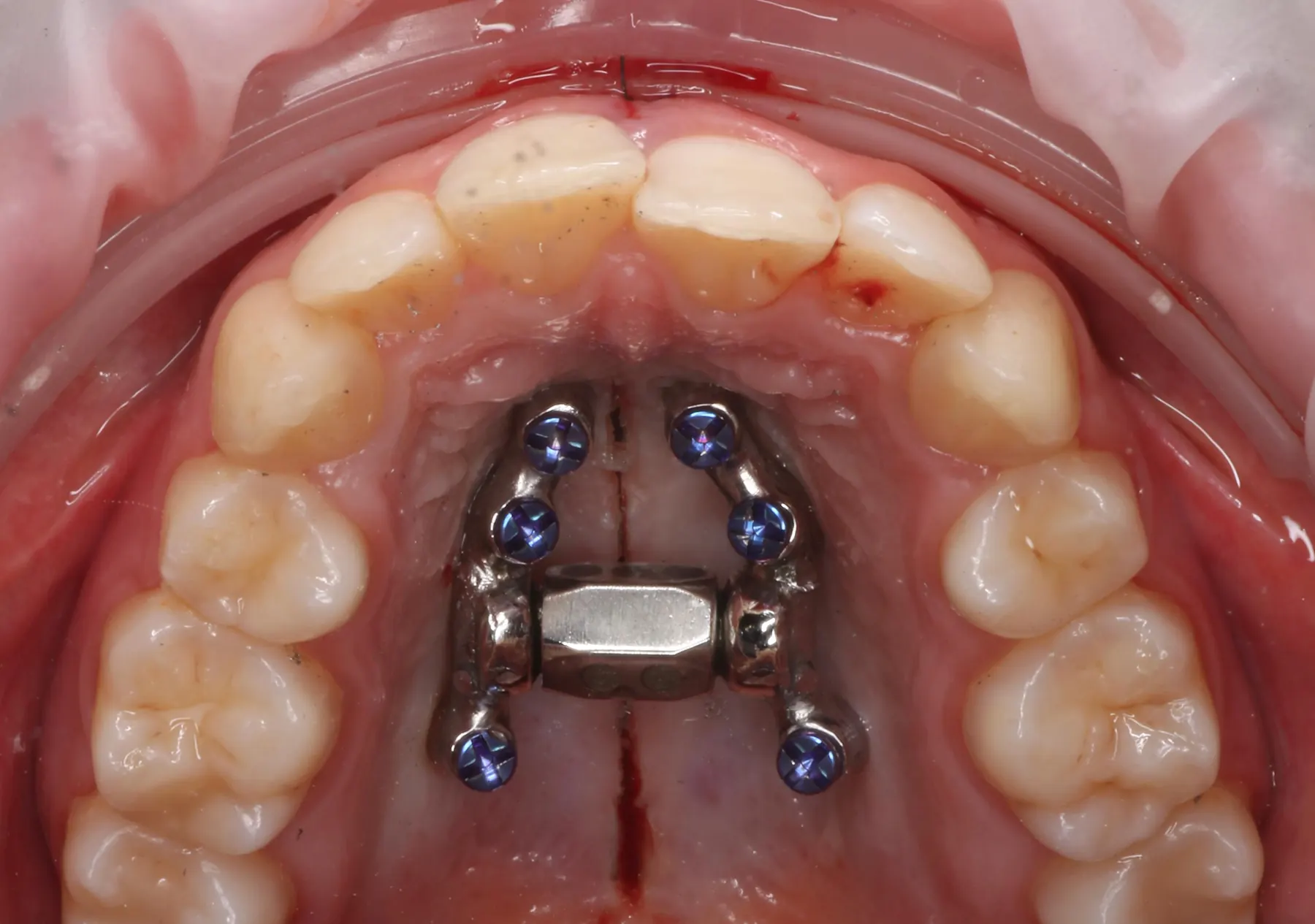
MARPE and skeletal expansion
Widening the upper jaw is straightforward in a growing child and difficult in an adult, because the mid-palatal suture…
Custom miniscrew MARPE
A stock expander is fitted to a palate. A custom expander is designed from one. The difference shows up in where the…
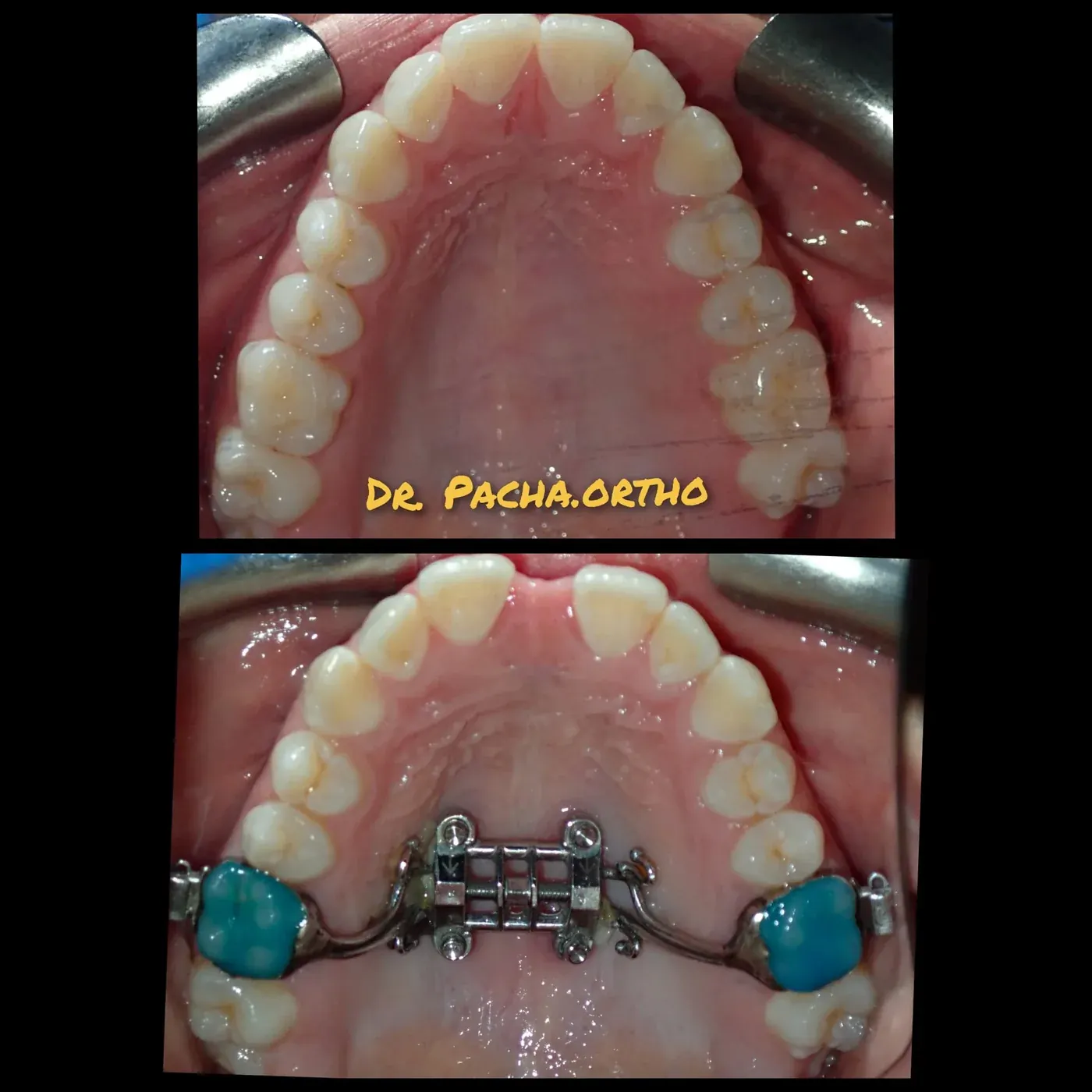
Treated cases
These are intraoral photographs from Dr. Pacha's own MARPE cases, showing the palatal arch before treatment and after…
Appointments
Arrange a specialist orthodontic assessment in Dubai
Consultations take place at Manhal Medical Center, Al Safa 1, Dubai, in English or Arabic. Every assessment begins with a full clinical examination and, where indicated, 3D imaging — not a treatment quote.