Treatment
Palatal expansion in Dubai
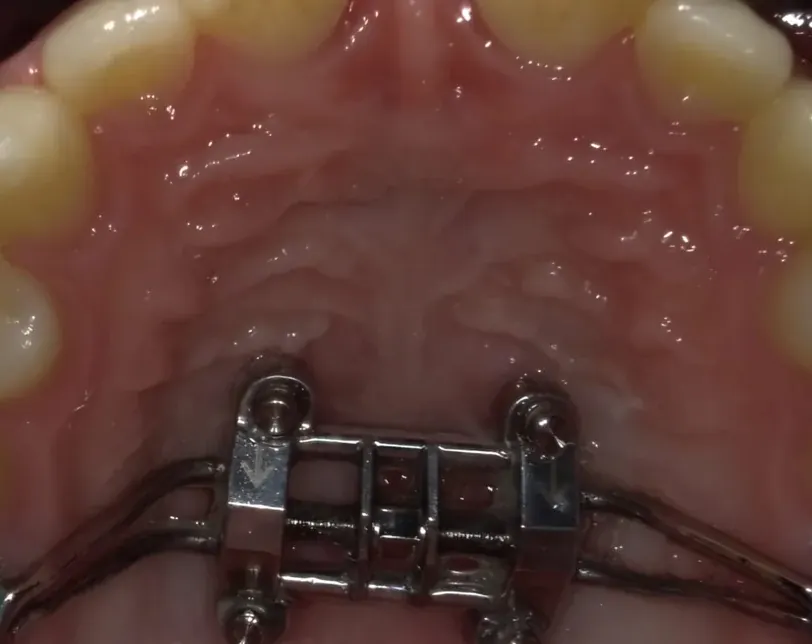
Widening the upper jaw is a single goal with several different techniques behind it. Which one is appropriate depends almost entirely on the state of one anatomical structure: the mid-palatal suture.
On this page
Palatal expansion in Dubai
Why expansion is done
- To correct a posterior crossbite, particularly where the lower jaw shifts sideways on closing.
- To create arch space, sometimes reducing the need for extractions.
- To make room for teeth that are impacted or erupting into a narrow arch, especially the upper canines.
- As part of a structural plan where maxillary width is one of several factors under consideration, including in airway assessment.
- In preparation for protraction of the maxilla in a growing Class III patient.
The techniques
| Technique | Anchorage | Stage | What it achieves |
|---|---|---|---|
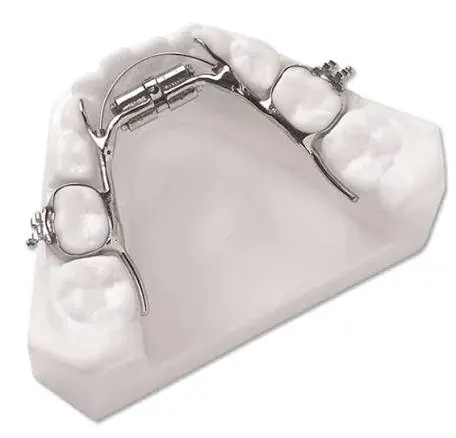
| Rapid maxillary expansion (RME) | Bonded or banded to teeth | Growing children | Genuine separation of the mid-palatal suture with skeletal widening |
| Slow expansion / quad helix | Teeth | Children, mild cases | Mostly dental widening with some skeletal effect in young patients |
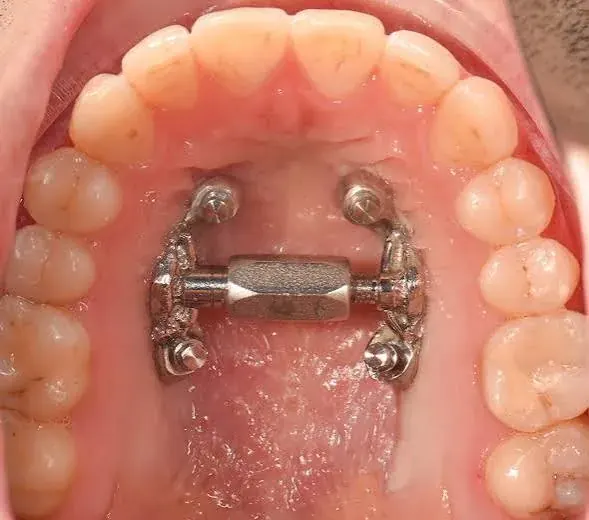
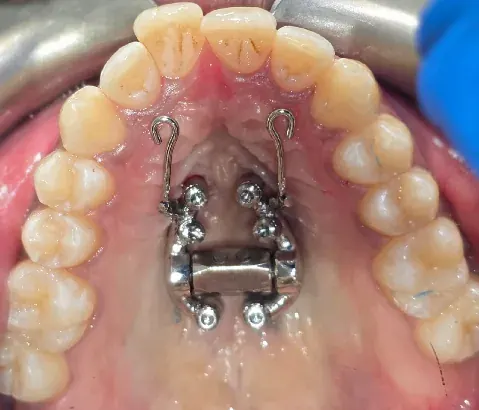
| MARPE / MSE | Palatal bone via miniscrews | Late adolescents, selected adults | Skeletal widening without surgery where suture anatomy allows |
| Surgically-assisted RPE | Surgical release plus appliance | Adults with a fused suture | Skeletal widening where a non-surgical approach is not viable |
| Dental expansion | Fixed appliances or aligners | Any age, mild cases | Tips teeth outward; appropriate only where the deficiency is dental |
How the choice is made
By assessment, not by preference. Clinical examination establishes whether there is a genuine transverse discrepancy and whether the mandible shifts. Study models or a digital scan quantify arch width. In older patients, CBCT establishes the maturity of the suture and the bone available for anchorage. Only then is a technique selected.
After expansion
Expanded arches relapse if they are not held. A consolidation period with the appliance passive in place allows new bone to form in the suture; a retention phase follows. The alignment of teeth within the new arch form is a separate orthodontic phase.
Frequently asked questions
At what age is expansion easiest?
Before the adolescent growth spurt, while the mid-palatal suture is open — typically in the mixed dentition. A posterior crossbite in a child is one of the clearer indications for early orthodontic treatment for this reason.
Does expansion hurt?
It produces pressure rather than pain, often felt across the nose and cheekbones for a short period after each activation. Children generally tolerate it well.
Will the gap between the front teeth stay?
No. A midline gap opening during expansion indicates the suture is separating, which is the intended effect. It is closed during the subsequent orthodontic phase.
Page last reviewed: 2026-09-10. This page is general health information about orthodontic care and is not a diagnosis, a treatment plan, or a substitute for an in-person clinical examination. Suitability for any treatment described here can only be established after a consultation, clinical assessment and the appropriate records. If you have symptoms that concern you, seek advice from a qualified clinician.
Appointments
Arrange a specialist orthodontic assessment in Dubai
Consultations take place at Manhal Medical Center, Al Safa 1, Dubai, in English or Arabic. Every assessment begins with a full clinical examination and, where indicated, 3D imaging — not a treatment quote.