Condition
Narrow upper jaw
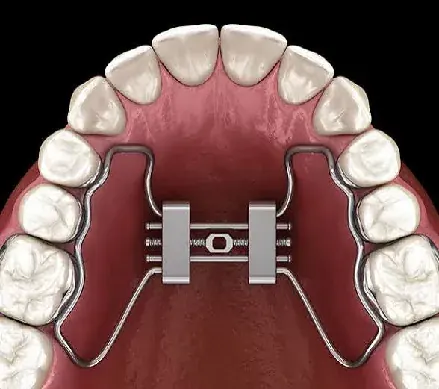
Maxillary transverse deficiency means the upper jaw is narrower than the lower jaw requires. It is one of the few orthodontic problems where the patient's age fundamentally changes the treatment.
How it presents
- A posterior crossbite on one or both sides — the upper back teeth biting inside the lower.
- A high, narrow, vaulted palate.
- Dental crowding, particularly of the upper canines.
- Dark spaces at the corners of the smile (buccal corridors).
- A shift of the lower jaw to one side on closing, in unilateral cases.
- Sometimes, difficulty with nasal breathing — the floor of the nose is the roof of the mouth.
How it is assessed
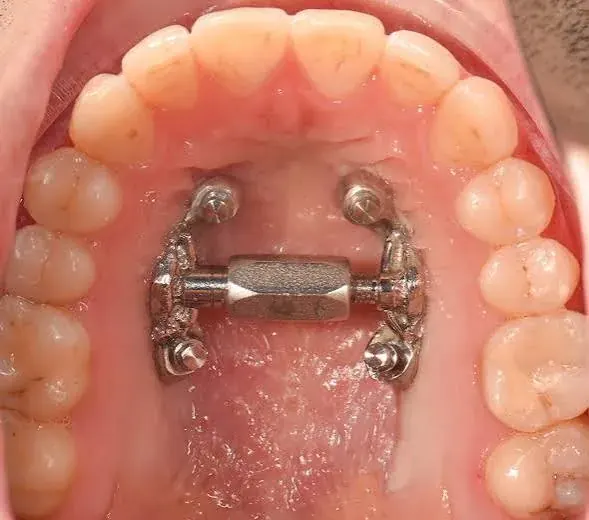
Width is assessed clinically and on records: measurement of intermolar and intercanine widths on the study models or digital scan, the presence and type of crossbite, whether the mandible is shifting, and — where expansion is being considered in an older patient — CBCT assessment of the maturity of the mid-palatal suture and the thickness of palatal bone.
Treatment options by age
| Stage | Option | Notes |
|---|---|---|
| Growing child | Rapid maxillary expansion (tooth-borne) | Predictable skeletal effect while the suture is open |
| Late adolescent | MARPE / MSE | Bone-anchored; may avoid surgery where the suture is maturing but not fused |
| Adult | MARPE / MSE, or surgically-assisted expansion | Decided on CBCT suture morphology, not on age alone |
| Any age, mild cases | Dental expansion with fixed appliances or aligners | Tips teeth rather than widening bone — appropriate only where the deficiency is dental |
Frequently asked questions
Can an adult's upper jaw be widened without surgery?
In selected adults, yes, using miniscrew-assisted expansion. Whether it is possible in your case depends on the maturity of your mid-palatal suture and the bone available at the screw sites, assessed on CBCT. Where the anatomy does not support it, a surgically-assisted approach is the appropriate recommendation.
Does a narrow jaw cause breathing problems?
A narrow, high palate reduces the volume of the nasal floor, and there is a recognised association between maxillary width and nasal airway dimensions. That is an association, not a guarantee that widening the jaw will improve your breathing. If breathing is the main concern, ENT and medical assessment should come first.
Will expansion change my face?
Skeletal expansion widens the maxilla, and modest changes to the nasal base and smile width can follow. The extent varies and cannot be predicted precisely. Expansion should be planned for a diagnosed transverse problem, not as a facial aesthetic procedure.
Page last reviewed: 2026-09-10. This page is general health information about orthodontic care and is not a diagnosis, a treatment plan, or a substitute for an in-person clinical examination. Suitability for any treatment described here can only be established after a consultation, clinical assessment and the appropriate records. If you have symptoms that concern you, seek advice from a qualified clinician.
Appointments
Arrange a specialist orthodontic assessment in Dubai
Consultations take place at Manhal Medical Center, Al Safa 1, Dubai, in English or Arabic. Every assessment begins with a full clinical examination and, where indicated, 3D imaging — not a treatment quote.