Treatment
Digital impressions
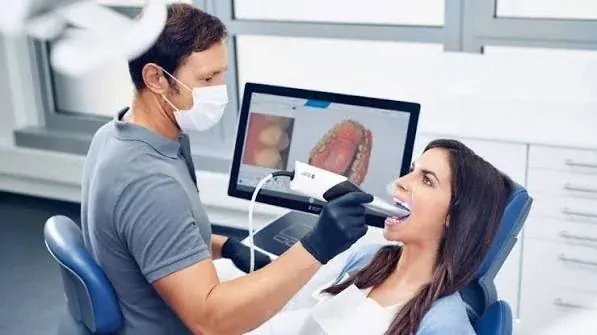
An intraoral scanner records the shape of the teeth optically. It replaces impression material for almost every orthodontic purpose, and it makes something possible that impressions never did: precise comparison over time.
How it works
A small handheld camera is passed over the teeth, capturing thousands of images that are assembled into an accurate three-dimensional model. It takes a few minutes, involves no material in the mouth, and can be paused and resumed.
What it is used for
- Manufacturing clear aligners, retainers, expanders and other appliances.
- Diagnostic records — arch dimensions, space analysis and bite relationships.
- Planning tooth movement digitally before treatment starts.
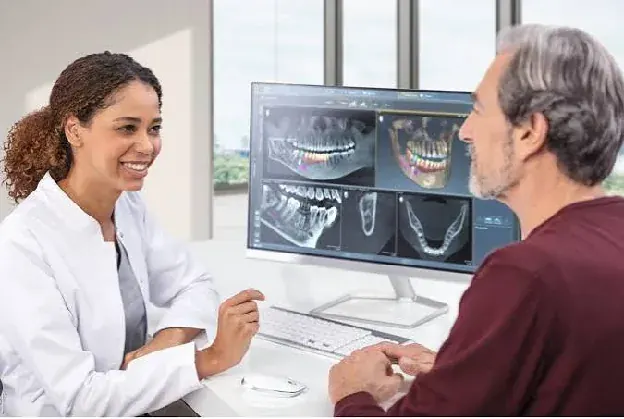
- Merging with CBCT data to plan appliances such as custom MARPE expanders.
- Comparing scans taken months apart to measure exactly how much movement has occurred, and whether it matches the plan.
Why it is better than impressions
- No gagging, no setting material, no retaking a whole impression because of one void — the scanner simply re-records that area.
- Better accuracy for most purposes, and no distortion in transit or storage.
- The record is permanent and reusable; a replacement retainer can be made years later from the original scan without seeing the patient for a new impression.
- Superimposition of successive scans gives objective progress data rather than an impression of progress.
Frequently asked questions
Does scanning hurt?
No. It is a camera passed over the teeth. Some patients find the wand slightly bulky at the back of the mouth, but it is far more comfortable than impression material.
Are digital scans as accurate as impressions?
For orthodontic purposes, yes — and generally more so, since there is no material distortion and any imperfect area can be re-recorded rather than requiring the whole impression to be retaken.
Can my scan be used later for a new retainer?
Yes, provided the teeth have not moved. That is one of the practical advantages of a digital record.
Page last reviewed: 2026-09-10. This page is general health information about orthodontic care and is not a diagnosis, a treatment plan, or a substitute for an in-person clinical examination. Suitability for any treatment described here can only be established after a consultation, clinical assessment and the appropriate records. If you have symptoms that concern you, seek advice from a qualified clinician.
Appointments
Arrange a specialist orthodontic assessment in Dubai
Consultations take place at Manhal Medical Center, Al Safa 1, Dubai, in English or Arabic. Every assessment begins with a full clinical examination and, where indicated, 3D imaging — not a treatment quote.