Treatment
Clear aligners in Dubai
Aligners are a genuinely good appliance used within their range, and a poor one used outside it. The value of a specialist plan is knowing which case you have before you start.
How aligner treatment works
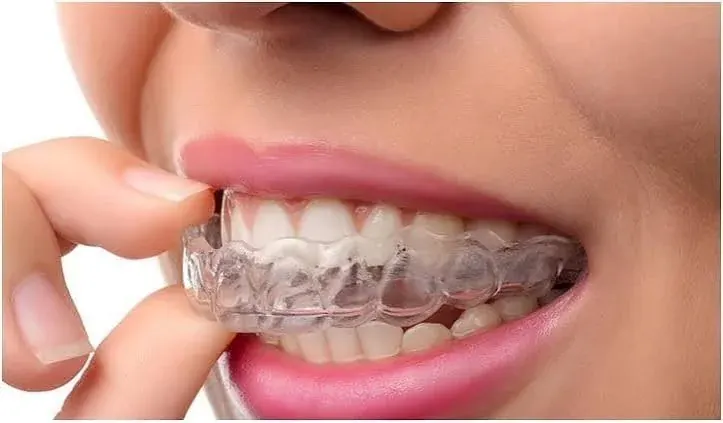
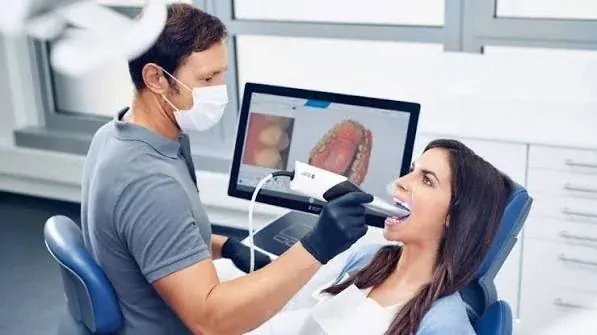
A digital scan of your teeth is used to plan the sequence of movements from the starting position to the finish. That sequence is divided into a series of thin, transparent trays, each of which is slightly different from the last. Wearing each tray for the prescribed period applies light, continuous force in the planned direction.
Most cases need attachments: small tooth-coloured composite shapes bonded to specific teeth to give the aligner something to grip, without which certain movements simply do not happen. Many also need interproximal reduction — a small, controlled reduction of enamel between teeth to create space — or elastics.
What aligners do well
- Mild to moderate crowding and spacing.
- Alignment relapse after previous orthodontic treatment.
- Controlled tipping and simple space closure.
- Cases where a removable appliance genuinely matters for work or social reasons, and where the required movements are within range.
- Adults with good periodontal health who will actually wear them.
Where aligners are less predictable
- Large rotations, particularly of round-rooted teeth such as premolars and canines.
- Significant extrusion — pulling a tooth down — and intrusion of individual teeth.
- Bodily movement of roots through bone, for instance closing large extraction spaces.
- Substantial skeletal correction, which needs growth modification, skeletal anchorage or surgery rather than an aligner.
- Cases depending on patient compliance where that compliance is doubtful — an aligner in a case is doing nothing.
What treatment involves
- Assessment and records
Clinical examination, intraoral scan, photographs and radiographs. The decision on whether aligners are appropriate is made here, not after the trays have been ordered.
- Digital plan
The movement sequence is designed and reviewed by Dr. Pacha — not accepted as produced by software. Attachment design, interproximal reduction and staging are clinical decisions.
- Fitting
Attachments are bonded and the first aligners issued, with instructions on insertion, removal, cleaning and wear time.
- Progress reviews
Every six to ten weeks, checking that the teeth are tracking the plan. Where they are not, this is identified early rather than at the end.
- Refinement
Most cases need a refinement stage: a new scan and a further short series of aligners to finish detail. This is normal and should be discussed as part of the plan, not presented as a failure.
- Retention
Retainers, worn indefinitely. Aligner cases relapse as readily as any other.
Risks and considerations
- Frequent snacking is difficult, because aligners must come out to eat and teeth should be cleaned before they go back in.
- A temporary lisp is common for the first days.
- Attachments are visible up close, and the aligners themselves are visible but discreet.
- Loss or damage of trays delays treatment and may incur replacement costs.
- The risks common to all orthodontics — decalcification, root resorption, relapse — apply here too.
Frequently asked questions
Are clear aligners as good as braces?
For cases within their range, they produce comparable results. For movements they handle poorly — large rotations, extrusion, bodily root movement, big skeletal discrepancies — fixed appliances are more predictable. The honest answer depends on your diagnosis, which is why it is given after an examination.
How many hours a day do I have to wear them?
Twenty to twenty-two, every day, removed only for eating and for drinking anything but water. Aligners worn less than this stop tracking the planned movement and the case has to be restarted.
Will I need attachments?
Almost certainly. Attachments are small composite shapes bonded to teeth that give the aligner purchase. Without them, several categories of movement do not occur. They are removed at the end of treatment.
Can aligners fix an overbite or underbite?
They can address the dental component of some bite problems, often with elastics. They cannot change the size or position of the jaws. Where the discrepancy is skeletal, the options are growth modification in a child, camouflage with a fixed appliance and anchorage, or orthognathic surgery — and you should be told which of those applies to you.
Page last reviewed: 2026-09-10. This page is general health information about orthodontic care and is not a diagnosis, a treatment plan, or a substitute for an in-person clinical examination. Suitability for any treatment described here can only be established after a consultation, clinical assessment and the appropriate records. If you have symptoms that concern you, seek advice from a qualified clinician.
Continue reading
Braces in Dubai
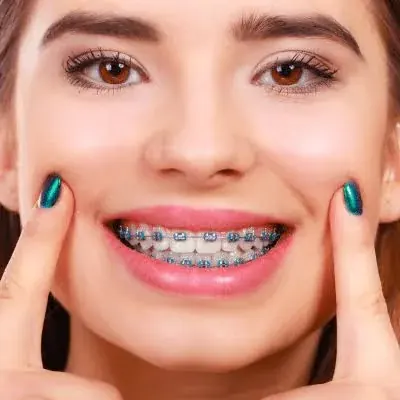
Fixed appliances remain the most versatile tool in orthodontics. They can produce movements no removable appliance can, they…
Digital impressions
An intraoral scanner records the shape of the teeth optically. It replaces impression material for almost every orthodontic…
Crowded teeth
Crowding is a mismatch between the space available in the arch and the space the teeth need. Every treatment for it works by…
Appointments
Arrange a specialist orthodontic assessment in Dubai
Consultations take place at Manhal Medical Center, Al Safa 1, Dubai, in English or Arabic. Every assessment begins with a full clinical examination and, where indicated, 3D imaging — not a treatment quote.