Treatment
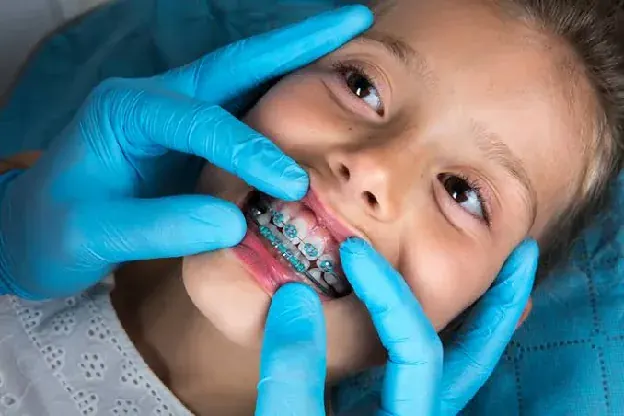
Children's orthodontics in Dubai
Growth is the one resource in orthodontics that has a deadline. Using it well means treating some problems early, and — just as importantly — not treating others until the right moment.
When to have a first assessment
Around seven to eight years of age, once the first permanent molars and incisors are through. At that point the developing dentition can be assessed, the growth pattern read, and problems that benefit from early intervention identified.
Most children assessed at that age need no treatment at all — they need review. That is the correct outcome for the majority, and a practice that recommends appliances for every seven-year-old it sees should be treated with scepticism.
Problems worth treating early
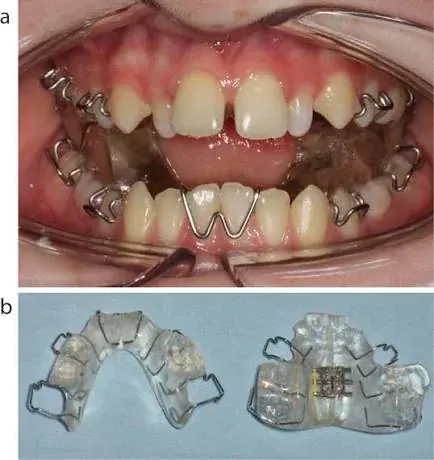
- Posterior crossbite, especially with a functional shift of the lower jaw on closing.
- Anterior crossbite and developing Class III patterns, where protraction works best before about ten years of age.
- Severely increased overjet with prominent upper incisors, which are at markedly higher risk of trauma.
- Impacted or ectopically erupting teeth, particularly upper canines, where early intervention can avoid surgical exposure later.
- Early loss of primary teeth causing space loss, where a space maintainer preserves the arch.
- Habits such as persistent thumb sucking causing a developing open bite.
Problems better left until later
Crowding in the mixed dentition often looks alarming and frequently resolves or changes character as the permanent teeth erupt. Treating it early can mean two courses of appliances instead of one, with more total time in braces and no better final result. The same is true of most purely aesthetic concerns before the permanent dentition is established.
Treatment in adolescence
The main phase is usually started once the permanent dentition is established, and where growth modification is planned, timed to the pubertal growth spurt. Fixed appliances are the workhorse; aligners are used in selected cases; functional appliances are used where a jaw relationship can still be influenced.
What is asked of the family
- Attendance every six to ten weeks.
- Cleaning — the single biggest determinant of whether treatment leaves the teeth better or worse than it found them.
- Diet: avoiding hard and sticky food, and limiting sugary drinks entirely, not just reducing them.
- Wearing what is prescribed — elastics and removable appliances only work when they are in.
- Retention afterwards, which is indefinite.
Frequently asked questions
At what age should my child see an orthodontist?
Around seven to eight. Most will simply be monitored; the purpose is to identify the minority for whom early treatment genuinely changes the outcome.
My child has crowded teeth — should we start now?
Often not. Crowding in the mixed dentition frequently changes as permanent teeth erupt, and treating it early can mean two courses of appliances for the same final result. The exceptions are crossbites, developing Class III patterns, very prominent incisors and impacted teeth.
Do baby teeth need to be removed?
Sometimes — to relieve crowding, to help a permanent tooth erupt in the right place, or where a primary tooth is retained beyond its time. It is a specific decision based on radiographs, not a routine.
Will my child need braces twice?
Only if early treatment is genuinely indicated. Where it is, a second phase in adolescence is usually needed to complete alignment. Where it is not, one well-timed phase is both shorter and cheaper.
Page last reviewed: 2026-09-10. This page is general health information about orthodontic care and is not a diagnosis, a treatment plan, or a substitute for an in-person clinical examination. Suitability for any treatment described here can only be established after a consultation, clinical assessment and the appropriate records. If you have symptoms that concern you, seek advice from a qualified clinician.
Appointments
Arrange a specialist orthodontic assessment in Dubai
Consultations take place at Manhal Medical Center, Al Safa 1, Dubai, in English or Arabic. Every assessment begins with a full clinical examination and, where indicated, 3D imaging — not a treatment quote.