Treatment
TADs — temporary anchorage devices
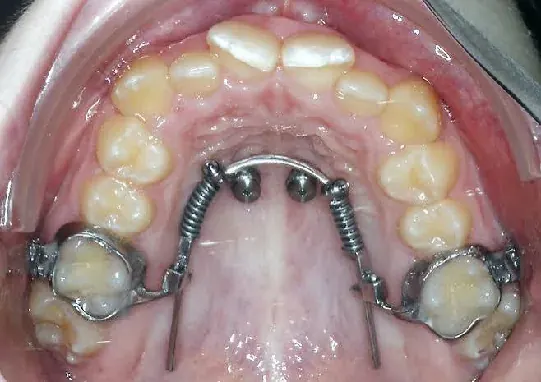
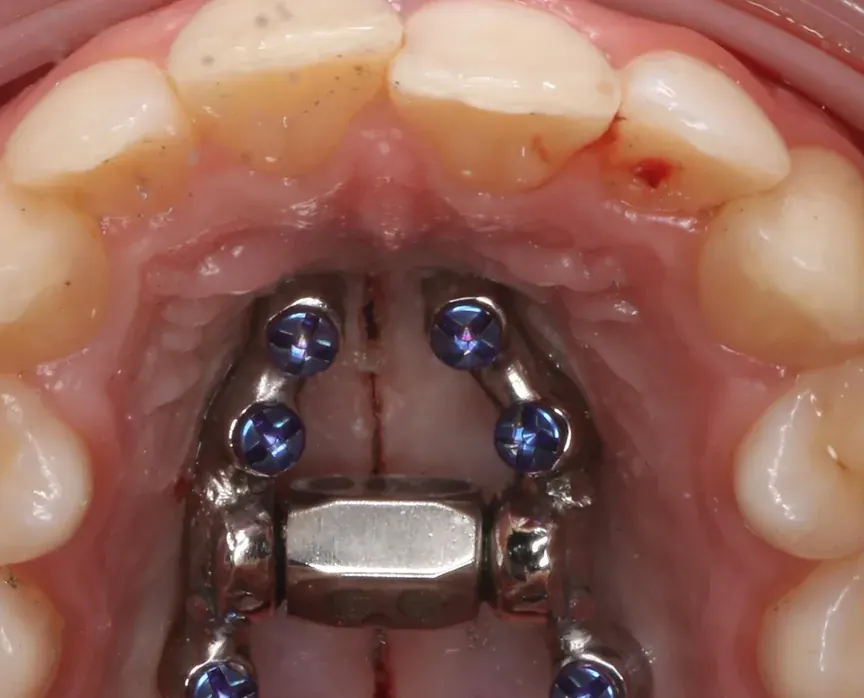
A TAD is a small titanium screw placed in bone to give an orthodontic appliance something immovable to push against. It changes what is mechanically possible.
The anchorage problem
Every orthodontic force has an equal and opposite reaction. Moving one tooth means something else takes the reaction and moves too — usually not in a direction anyone wants. Historically this was managed with headgear, extractions, or by accepting a compromise.
A temporary anchorage device is a small screw, typically 1.3 to 2 mm in diameter, placed into bone. It does not move, so the reaction force is absorbed by bone rather than by teeth. This is described as absolute anchorage.
What becomes possible
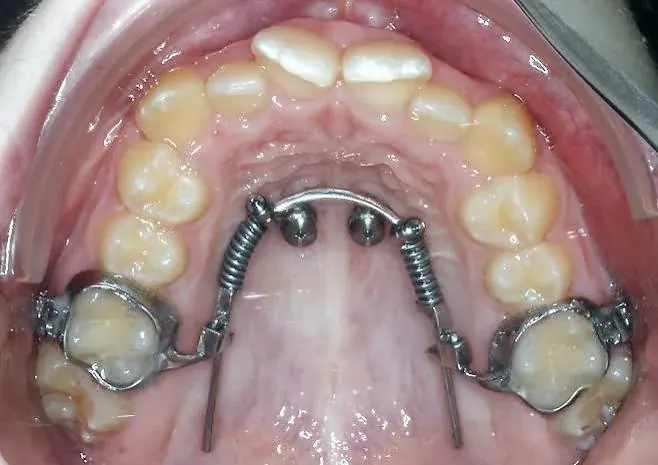
- Molar distalisation without the incisors coming forward.
- Intrusion of over-erupted teeth — for example an upper molar that has dropped into a lower gap, which is very difficult without skeletal anchorage.
- Deep bite correction by true incisor intrusion rather than by extruding back teeth.
- Space closure where the anchor teeth would otherwise drift forward.
- Midline correction and asymmetric mechanics.
- Non-extraction treatment in cases that would previously have required extractions — though not in every case, and not as a blanket policy.
Placement
Placement takes a few minutes under local anaesthetic. Most patients report pressure rather than pain, and mild tenderness for a day or two afterwards. Sites are chosen from radiographs to avoid roots, nerves and sinuses. The screws are removed at the end of the phase they were placed for, usually without anaesthetic.
Risks
- Loosening or failure — this happens in a minority of screws and generally means replacement at a different site.
- Soft tissue inflammation around the screw head, managed with cleaning.
- Contact with a root, which is uncommon and usually heals when the screw is repositioned.
- Screw fracture on placement or removal, which is rare.
Frequently asked questions
Are TADs implants?
No. Dental implants osseointegrate and are permanent. TADs are designed to be mechanically stable but not integrated, so they can be removed easily when the movement they were placed for is complete.
Does placing a TAD hurt?
It is done under local anaesthetic and takes a few minutes. Most patients describe pressure at the time and mild tenderness for a day or so afterwards.
How long do they stay in?
Only as long as the mechanics need them — often a few months. They are removed once the movement is complete.
Page last reviewed: 2026-09-10. This page is general health information about orthodontic care and is not a diagnosis, a treatment plan, or a substitute for an in-person clinical examination. Suitability for any treatment described here can only be established after a consultation, clinical assessment and the appropriate records. If you have symptoms that concern you, seek advice from a qualified clinician.
Appointments
Arrange a specialist orthodontic assessment in Dubai
Consultations take place at Manhal Medical Center, Al Safa 1, Dubai, in English or Arabic. Every assessment begins with a full clinical examination and, where indicated, 3D imaging — not a treatment quote.