Treatment
Sleep-disordered breathing in Dubai
This page is about the whole spectrum, not only diagnosed apnoea: how orthodontic assessment recognises it, what it contributes, and where it hands over.

Recognition in the orthodontic clinic
Sleep and breathing questions are part of the standard history here, for adults and children alike. That is not because orthodontics treats these conditions, but because orthodontic clinics see a great many people with undiagnosed sleep-disordered breathing and are well placed to notice it.
- In adults: habitual snoring, witnessed pauses, waking unrefreshed, morning headache, daytime sleepiness, difficult-to-control hypertension, marked bruxism.
- In children: any habitual snoring, mouth breathing at night, restless sleep, unusual sleeping positions, bedwetting beyond the expected age, daytime inattention or hyperactivity.
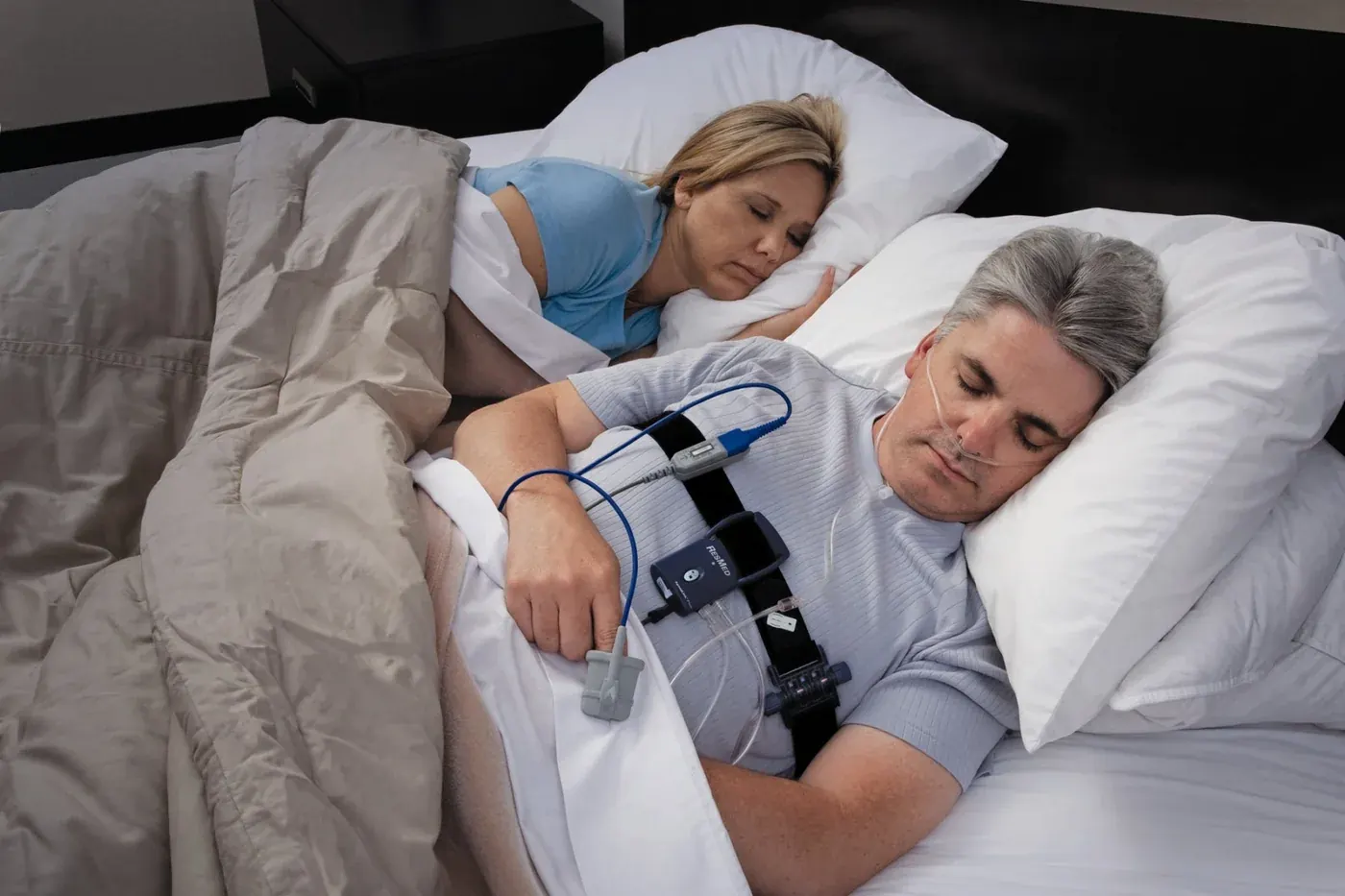
Screening
Where the history suggests a breathing disorder, a home sleep study can be arranged to provide objective data. This is a screening step designed to make a referral more useful — it is not a diagnosis, and it does not replace physician interpretation. In children, home studies are less informative and referral is generally the more appropriate step.
Referral
| Finding | Referred to | Why |
|---|---|---|
| Symptoms suggesting obstructive sleep apnoea | Sleep medicine | Diagnosis and management decisions belong to a physician |
| Enlarged tonsils or adenoidal obstruction | ENT | The commonest cause in children, and treatable |
| Persistent nasal obstruction, rhinitis | ENT / allergy | Nasal airflow is upstream of anything orthodontics can change |
| Restricted tongue mobility, abnormal swallowing | Speech and language therapy | Functional assessment where it is contributing |
| Significant skeletal discrepancy in an adult | Maxillofacial surgery | Where maxillomandibular advancement is under consideration |
The orthodontic contribution
Within a medical plan, orthodontics can offer oral appliance therapy for adults, maxillary expansion where a transverse deficiency is diagnosed, growth modification in children with a significant skeletal discrepancy, and orthodontic preparation for surgery. Each of these treats an orthodontic problem. None is presented as a treatment for the breathing disorder itself.
- Sleep and breathing overview
- The condition explained
- Home sleep study
- Airway orthodontics
- Mouth breathing
Frequently asked questions
What is the difference between snoring and sleep-disordered breathing?
Snoring is a symptom. Sleep-disordered breathing is the spectrum it can sit on, running from simple snoring through increased upper airway resistance to obstructive sleep apnoea. Only a sleep study can say where on that spectrum a particular person sits.
Should my child have a sleep study?
That is a decision for a paediatrician or sleep physician. Home studies are less informative in children than in adults, and referral for proper assessment is usually the more useful step where symptoms are present.
Will orthodontic treatment fix my child's sleep?
It should not be presented that way. Most childhood sleep-disordered breathing relates to adenoids and tonsils. Orthodontic treatment addresses a skeletal problem where one exists, as part of a broader plan.
Page last reviewed: 2026-09-10. This page is general health information about orthodontic care and is not a diagnosis, a treatment plan, or a substitute for an in-person clinical examination. Suitability for any treatment described here can only be established after a consultation, clinical assessment and the appropriate records. If you have symptoms that concern you, seek advice from a qualified clinician.
Appointments
Arrange a specialist orthodontic assessment in Dubai
Consultations take place at Manhal Medical Center, Al Safa 1, Dubai, in English or Arabic. Every assessment begins with a full clinical examination and, where indicated, 3D imaging — not a treatment quote.