Treatment
Beneslider
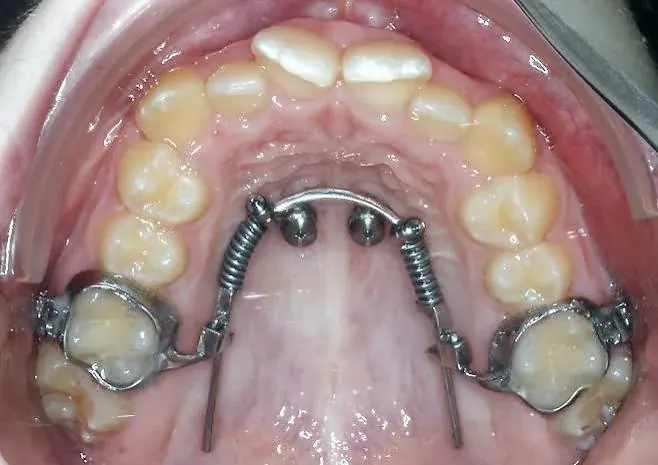
The Beneslider moves upper molars backwards using anchorage in the palate rather than the rest of the dentition — so the front teeth do not move forward as a side effect.
The problem it solves
Distalising upper molars creates space, which can relieve crowding or correct a Class II relationship without extractions. The difficulty is Newton's third law: pushing molars back pushes something else forward, and traditionally that something was the front teeth — which is why headgear was needed to provide external anchorage.
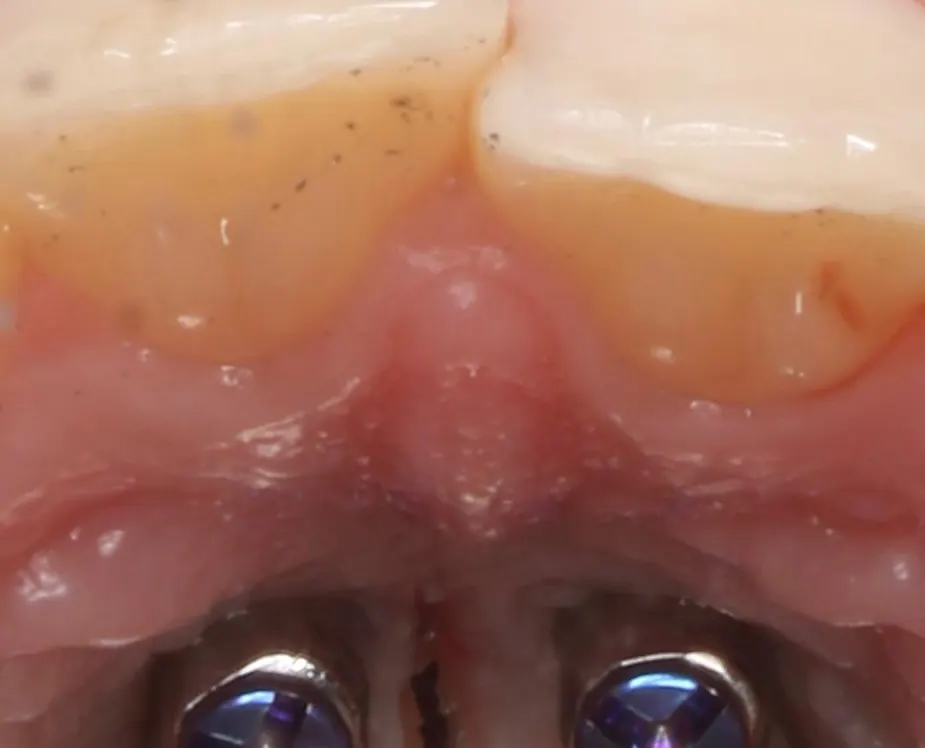
A Beneslider anchors into palatal bone using miniscrews. Because the reaction force is taken by bone rather than by the anterior teeth, the molars move back without the incisors coming forward, and no headgear is required.
Where it is used
- Class II correction where extractions are being avoided.
- Creating space for crowded or impacted upper teeth, particularly canines.
- Correcting molars that have drifted forward after early loss of a primary or permanent tooth.
- Adults, where growth modification is not available and headgear is not acceptable.
Practicalities
- Miniscrews are placed in the palate under local anaesthetic.
- The appliance is fixed and works continuously — no compliance required beyond cleaning.
- Speech is affected for the first days.
- Cleaning around the appliance and screws needs attention.
- It is usually followed by a fixed appliance phase to use the space created.
Frequently asked questions
Does it hurt?
Screw placement is done under local anaesthetic. There is pressure and tenderness on the molars as they move, similar to any orthodontic force.
Is it an alternative to extractions?
In some cases, yes — creating space by moving molars back rather than by removing teeth. Whether that is possible depends on how much space is needed and whether there is room behind the molars to move into, which is assessed on radiographs.
Page last reviewed: 2026-09-10. This page is general health information about orthodontic care and is not a diagnosis, a treatment plan, or a substitute for an in-person clinical examination. Suitability for any treatment described here can only be established after a consultation, clinical assessment and the appropriate records. If you have symptoms that concern you, seek advice from a qualified clinician.
Appointments
Arrange a specialist orthodontic assessment in Dubai
Consultations take place at Manhal Medical Center, Al Safa 1, Dubai, in English or Arabic. Every assessment begins with a full clinical examination and, where indicated, 3D imaging — not a treatment quote.