Treatment
Day and night orthotics
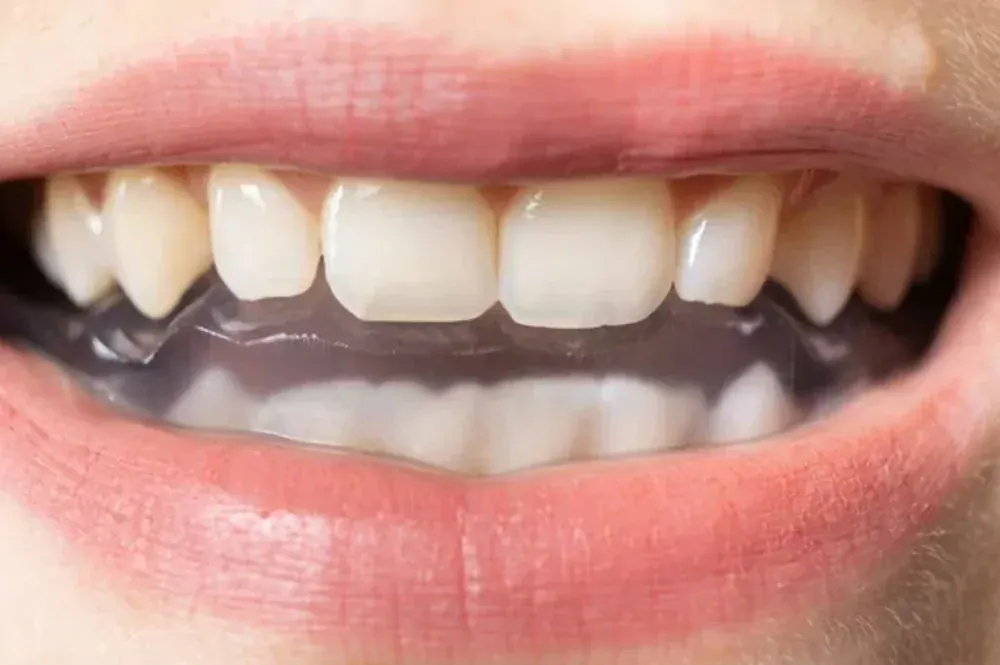
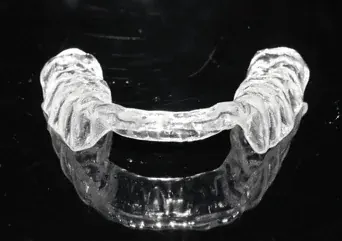
Some patients need jaw position managed through the day as well as at night. A paired set makes that practical: a discreet daytime appliance and a more robust nocturnal one.
Why two appliances
A conventional splint is worn at night, when parafunctional activity is highest and appearance does not matter. But some patients clench heavily during the day, and in some cases the therapeutic aim requires the jaw to be supported in a particular position more continuously than a night-only appliance allows.
The two appliances have different requirements. The daytime device must be discreet, allow speech and be comfortable for extended wear. The nocturnal device can be more robust and can carry the greater part of the therapeutic load.
When it is indicated
- Marked daytime clenching that is not controlled by awareness and habit-reversal measures alone.
- Persistent muscle pain that returns within hours of removing a night splint.
- A defined therapeutic phase in which the jaw is being supported in a specific position and intermittent support is undermining progress.
- Selected cases where continuity of jaw position is required before an orthodontic phase begins.
What it is not
This is not an appliance to be worn indefinitely by default, and it is not a substitute for identifying why someone is clenching. Continuous appliance wear has more potential to cause occlusal change than night-only wear, so it is used for defined periods with records taken at review to detect any change.
Frequently asked questions
Do I have to wear something all the time?
No — this is used for specific indications and for defined periods, not as a default. Most patients with jaw symptoms are managed with a night appliance and conservative measures.
Can wearing an appliance during the day change my bite?
Continuous wear carries more potential for occlusal change than night-only wear. That is why it is used for defined periods, with records at review to detect change early.
Page last reviewed: 2026-09-10. This page is general health information about orthodontic care and is not a diagnosis, a treatment plan, or a substitute for an in-person clinical examination. Suitability for any treatment described here can only be established after a consultation, clinical assessment and the appropriate records. If you have symptoms that concern you, seek advice from a qualified clinician.
Appointments
Arrange a specialist orthodontic assessment in Dubai
Consultations take place at Manhal Medical Center, Al Safa 1, Dubai, in English or Arabic. Every assessment begins with a full clinical examination and, where indicated, 3D imaging — not a treatment quote.