Treatment
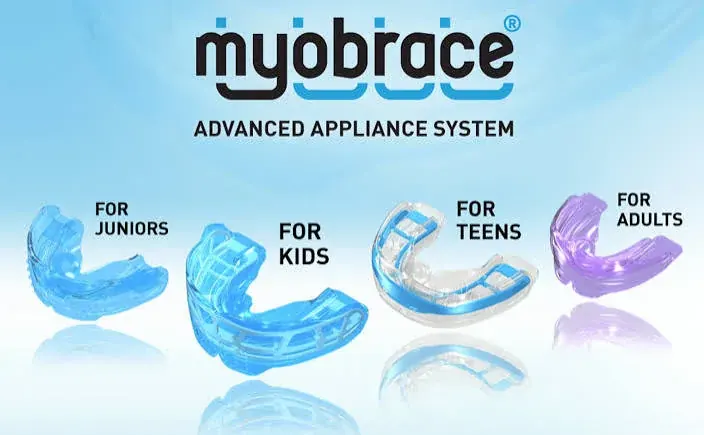
Myobrace and pre-formed trainers
Pre-formed elastomeric trainers are widely marketed for children. They have a genuine if narrow role, and the claims made for them frequently exceed what the evidence supports.
What they are
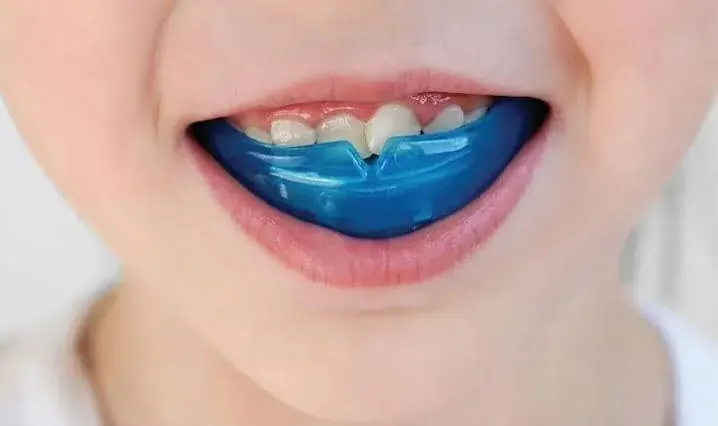
Pre-formed trainers are soft, factory-made elastomeric appliances available in a range of sizes rather than made for the individual. They are worn for a period during the day and overnight. Their intended actions are to discourage mouth breathing, guide tongue posture, provide light alignment force to erupting incisors, and interrupt habits.
Where they can genuinely help
- Habit interruption — thumb sucking and tongue thrusting.
- Encouraging lip closure and nasal breathing as an adjunct, once any physical obstruction has been treated.
- Mild alignment of erupting incisors in the mixed dentition.
- As a low-cost, low-commitment intervention in a young child where the alternative is doing nothing and the family wants to do something.
What the evidence does not support
Claims that pre-formed trainers correct skeletal discrepancies, meaningfully change facial growth, expand the jaws, or treat sleep-disordered breathing are not supported by good-quality evidence. Systematic reviews of these appliances consistently find small studies with methodological limitations and modest, mostly dental effects.
How they are used here
As a limited adjunct in appropriate cases, with a clear statement of what they are expected to achieve, and with review points at which a lack of progress leads to a change of plan rather than another size of trainer.
Frequently asked questions
Does Myobrace work?
For habit interruption and mild alignment of erupting incisors, it can have a modest effect. For skeletal correction, jaw expansion or facial growth modification, the evidence does not support the claims commonly made.
Can it replace braces?
For most children, no. It may help with specific functional issues, but it does not deliver the controlled tooth movement fixed appliances provide.
Is it worth trying first?
It depends entirely on the diagnosis. For a habit or mild incisor irregularity, possibly. For a crossbite, a Class III pattern or an obstructed airway, no — trying it first costs growth time that cannot be recovered.
Page last reviewed: 2026-09-10. This page is general health information about orthodontic care and is not a diagnosis, a treatment plan, or a substitute for an in-person clinical examination. Suitability for any treatment described here can only be established after a consultation, clinical assessment and the appropriate records. If you have symptoms that concern you, seek advice from a qualified clinician.
Appointments
Arrange a specialist orthodontic assessment in Dubai
Consultations take place at Manhal Medical Center, Al Safa 1, Dubai, in English or Arabic. Every assessment begins with a full clinical examination and, where indicated, 3D imaging — not a treatment quote.